HIGHLIGHTS: APRIL 11, 2025
• Opening remarks capture concern, optimism
• Update on latest tariff moves and trading partners’ responses
• D.C. fly-in highlights dairy trade priorities
• Actus, Ahlem recognized at dairy export awards
• Timpko receives recognition for 40 years of service
• Legislation seeks to address container break-ins
• House letter cautions on port fees
• Ag coalition letter urges food aid funding increase
• Member opportunity: one-on-one meetings with North African buyers
• USDEC 2025 events calendar
• Market Summary: USDEC Econ team looks at the year ahead
• NZ exports post another strong month
• Latest developments on European FMD outbreak
• Arla merger with DMK
• Bids come in for Fonterra’s Mainland Group
• Company news: Lactalis, Feihe, Nestlé, Arla Foods Ingredients
Featured
Harden points to U.S. dairy export history as guide for challenging times
In her opening remarks at this week’s USDEC Membership Meeting at the Willard Hotel in Washington, D.C., USDEC President and CEO Krysta Harden acknowledged the questions and uncertainties that must be going through U.S. suppliers’ minds given the current trade policy landscape. At the same time, she looked back on 30 years of export investment by U.S. suppliers and USDEC and reaffirmed her belief that the U.S. dairy sector is up to the challenge and growth lies ahead.
“We’ve had six presidents, 15 sessions of Congress and a lot of crazy things happen in those years—natural disasters, geopolitical issues, new borders, countries with brand new names, new regimes—but we are still who we are, as a people and as an industry,” said Harden. “We are steadfast, we are committed, we are resilient. We are nimble and flexible. Our partners trust us. They trust you. They know the quality of your products. They know the high value. They know they are a valued customer to you and us. U.S. dairy has earned that over the last 30 years. It was not given to us. We had to prove it as an industry, as individual companies and as individual people who form those relationships.”
Harden encouraged the audience to resist letting current trade policy turmoil drastically change company export strategies. USDEC, for its part, will continue to do what it does best, she said. Staff will continue to help open doors for U.S. suppliers to access high-potential markets, tell the U.S. dairy story and remind buyers that the U.S. wants to be their supplier of choice.
It will likely be challenging, “but on the other side of everything that’s happening today, there will be calm,” she said. When that calm comes, “we have to be ready as an industry to step up and renew those relationships and remind the world and our customer base that we are U.S. dairy and we have the best products in the world.”
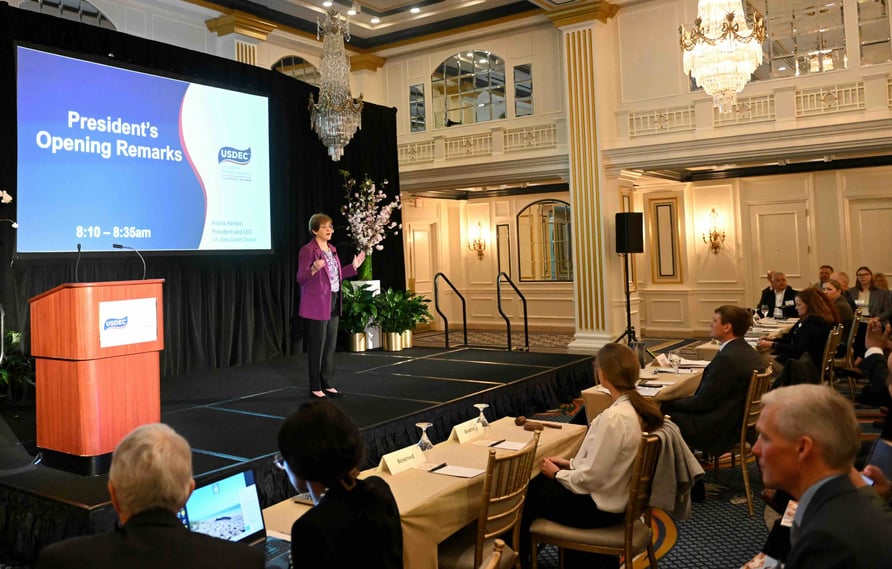
Krysta Harden outlines steps the organization is taking as it manages through the uncertainty of today’s trade policy environment.
Dairy Management Inc. (DMI) President and CEO Barb O’Brien followed Harden’s opening comments with a similar message of metered optimism. O’Brien pointed to “unprecedented investment from farmers and from dairy companies in this country,” adoption of new technologies and increasingly diversified portfolios.
She cited how dairy’s health and wellness advantage will continue to drive industry growth and how DMI is working to position dairy as a solution to health and wellness needs, from heart to gut to mental health to immunity and more.
“It is going to be shaky maybe in the near term, but the long-term is looking really bright,” she said.
The meeting attracted its largest crowd to date, with USDEC members, dairy farmers and representatives from regional U.S. dairy groups attending the event. It stretched over three days and included USDEC committee meetings, one-on-one meetings with USDEC overseas offices and a packed slate of insightful speakers at the general session. Archived versions of the general session presentations will be posted online for members to watch or re-watch in the coming days.
Trump pauses higher tariffs for most countries; China trade war escalates
At press time, the Trump Administration had issued a 90-day pause on the higher tariffs (those exceeding the baseline 10% level) in his reciprocal tariff plan for around 75 countries that did not implement retaliatory tariffs on the United States after the April 2 tariff announcement (see Global Dairy eBrief, 4/4/25). The baseline 10% tariff will still apply to all countries (with the exception of Canada and Mexico).
According to the administration, more than 70 countries had approached the U.S. seeking tariff negotiations. Japan is one of the first in line. Both the U.S. and Japan have already appointed chief negotiators for the talks, but no timetable had been released at press time.
Other key U.S. dairy export markets also looking to negotiate include:
- Vietnam, prior to the 90-day pause, offered to remove all tariffs on U.S. goods in exchange for the U.S. pausing tariffs for at least 45 days while the two countries negotiate. U.S. Treasury Secretary Scott Bessent met with Vietnam’s Deputy Prime Minister Ho Duc Phoc on Thursday and agreed to begin formal discussions on reciprocal trade between the two countries.
- Indonesia said the country will pursue a diplomatic solution rather than impose retaliatory tariffs. It is reportedly developing a trade package offer to present to the United States and will meet with the administration next week.
- The EU offered “zero-for-zero” tariffs on industrial goods as part of an effort to negotiate with the U.S.—an offer President Trump already deemed insufficient. On April 10, the EU announced a 90-day pause on the retaliatory tariffs the bloc had announced on April 9 in response to U.S. steel and aluminum tariffs. Dairy products that were originally announced in March as a potential part of the plan have been removed in the final target list, except for ice cream. The European Commission’s President Ursula von der Leyen noted that they wanted to give negotiations a chance, but if negotiations are not satisfactory, EU countermeasures will kick in.
- British officials said they believe they could reach a deal to reduce or remove tariffs on the UK within weeks, since the two governments had already been discussing a trade agreement that lowers tariffs on U.S. goods and tax rates for U.S. companies in Britain. At the same time, the UK has prepared a list of potential products that could see retaliatory tariffs if circumstances dictate. Dairy products are currently included on that list.
- South Korea sent a top trade official to Washington, D.C., this week to express concerns over the tariffs and discuss ways to mitigate the damage.
- Taiwan said it will not impose any retaliatory tariffs on the U.S. and prefers to negotiate with the Trump Administration toward a goal of zero tariffs on both sides.
More tariffs and retaliation in China
Because China instituted a retaliation list, it was not part of the tariff pause and was given an additional tariff increase. By the end of the week, the United States and China had significantly escalated their trade war, exchanging tariff hikes back and forth.
China moved forward with its plan to impose a 34% retaliatory tariff on U.S. goods (see the USDEC April 4 Member Alert), causing President Trump to increase tariffs on Chinese goods by another 50%. That move raised the reciprocal tariffs levied on Chinese goods to 84%, although this is on top of other pre-existing tariffs imposed in 2025 on Chinese products that push tariffs north of 100%.
Calling the U.S. moves “bullying” and vowing to “fight to the end,” China responded with an additional 50% increase of its own, bringing its total tariff hike on U.S. goods in response to reciprocal trade actions to 84% (see the USDEC April 9 Member Alert).
The president then announced that he was raising tariffs on Chinese imports to 125% “effective immediately” (see the Executive Order here). After those moves, the newly imposed China-specific tariffs are now 145%, counting the 20% fentanyl-related tariffs on top of the 125% reciprocal tariffs.
At press time, China countered again, raising tariffs on U.S. goods to 125% effective April 12. (CNBC, 4/9/25; New York Times, 4/9/25; Reuters, 4/8/25; CBS News, 4/8/25; Bloomberg, 4/8/25; Financial Times, 4/7/25; Forbes, 4/7/25)
Operating committee highlights dairy priorities to policymakers in DC fly-in
To maximize efficiency, USDEC organized a Capitol Hill “fly-in” directly after the Annual Membership Meeting. Twelve members of the USDEC Operating Committee remained in Washington, D.C., for two half days of meetings with congressional representatives and administration officials on Wednesday and Thursday. Participants included USDEC Chair Becky Nyman and Vice Chair Alex Peterson; and DMI Chair Marilyn Hershey.
Accompanied by USDEC President and CEO Krysta Harden, COO Martha Scott Poindexter and the USDEC Trade Policy team (Jaime Castaneda, Shawna Morris and Tony Rice), the group highlighted U.S. dairy trade priorities to several lawmakers, staff and agency representatives. Topics included potential opportunities and impact concerns related to the administration’s trade agenda, the importance of targeting tariff actions, the need to expand U.S. dairy export markets, ongoing dairy trade problems with Canada and the EU, the need for active U.S. involvement in international organizations like Codex, the WTO and the FAO, common name protections and more.
The packed agenda included meetings with:
- USTR officials, including Dr. Julie Callahan, assistant USTR for Agricultural Affairs and Commodity Policy, and Marshall Stallings, director for Intergovernmental Affairs and Public Engagement.
- USDA officials, including Jason Hafemeister, acting deputy under secretary, Daniel Whitley, FAS administrator, and Courtney Knupp, senior trade advisor to USDA Secretary Brooke Rollins.
- Meetings with a variety of House and Senate offices, as well as Committee staff for the Senate Committees on Finance and Agriculture and the House Ways & Means and Agriculture Committees.
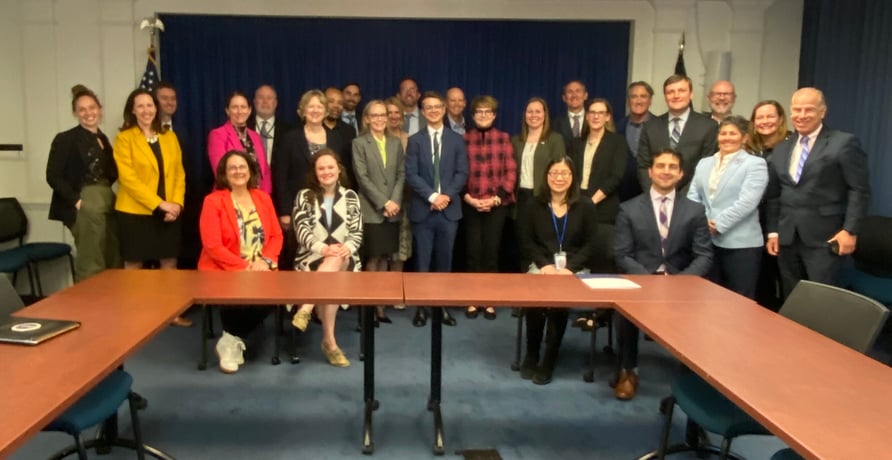
The USDEC delegation in a meeting with USTR staff.
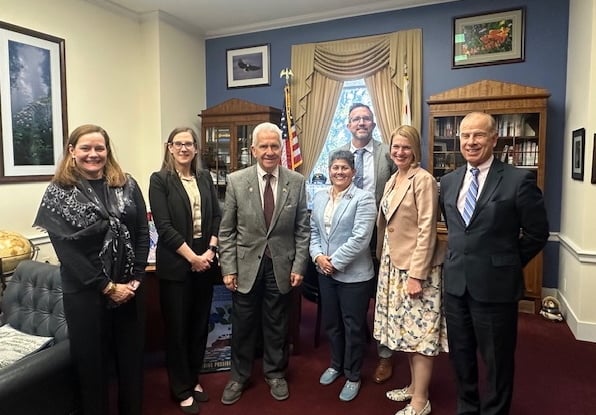
Left to right: USDEC’s Martha Scott Poindexter, California dairy farmer Becky Nyman, Rep. Jim Costa, DairyAmerica’s Patti Smith, Hilmar’s Kyle Jensen, Darigold’s Christine Van Asten, and USDEC’s Jaime Castaneda.
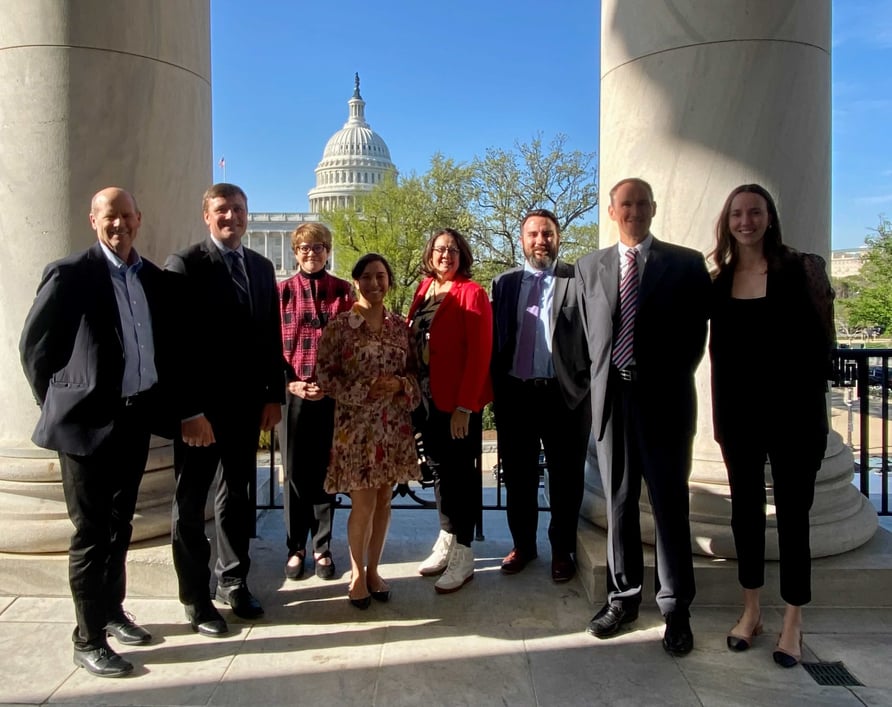
The USDEC delegation, including Chad Vincent, Dairy Farmers of Wisconsin, Alex Peterson, Krysta Harden, Marilyn Hershey, and Martin Bates, Dairy Farmers of America, with House Agriculture Committee staff.
Actus, Ahlem earn USDEC’s first annual Excellence in Exports Awards
This week’s Membership Meeting marked the official launch of USDEC’s new Excellence in Exports (ExEx) Awards. USDEC President and CEO Krysta Harden recognized Actus Nutrition with the Excellence in Exports Award and David Ahlem, president and CEO of Hilmar Cheese Co., with the Excellence in Innovation Award.
“These award recipients exemplify the innovation, leadership and dedication that drive the success of U.S. dairy in international markets,” Harden noted in a press release on the ceremony. “Their contributions have significantly strengthened America’s position as a global dairy leader while creating opportunities for the entire U.S. dairy industry.”
Actus Nutrition (formerly Milk Specialties Global) was recognized for its groundbreaking work introducing U.S.-produced casein and caseinates into the global market. Ahlem was honored for his leadership in developing innovative solutions to advance U.S. dairy exports, including leading the introduction of Hilmar Connect Global, a digital platform that enables customers to secure forward allocations based on the CME Index and choose flexible product mixes.
For more information, read the USDEC press release on the awards presentation.
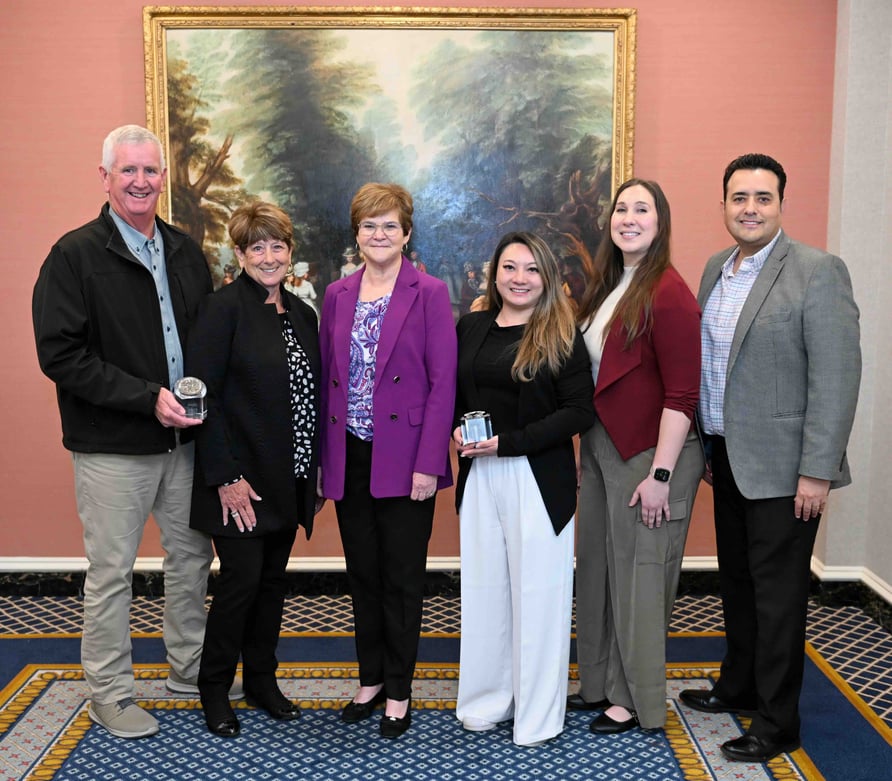
Left to right: Jim and Carol Ahlem (who accepted on behalf of David Ahlem), Krysta Harden and Jing Hagert, Jamie Miller and Enrique Pedroza, who accepted on behalf of Actus.
Timpko honored for 40 years of USDEC service
After the ExEx Awards presentation, USDEC recognized another individual for his 40 years of service to the U.S. dairy industry and U.S. dairy exports. Chuck Timpko, USDEC senior vice president, Operations and Evaluation, was one of the original six staff members when the U.S. Dairy Export Council was formed in 1995. He had previously served in research positions at Dairy Management Inc. and the National Dairy Promotion and Research Board.
Timpko has had a major impact on USDEC and U.S. dairy export efforts throughout his career. He was, for example, instrumental in helping establish the U.S. Center for Dairy Excellence in Singapore, oversaw the USDEC international offices, piloted the original USDEC market research efforts in the first years of the organization (when U.S. suppliers were just learning how, what and where to export), and served on the Agriculture Export Development Council.
Timpko will continue to work for USDEC on a part-time basis. Congratulations, Chuck!

Chuck Timpko holds the recognition plaque Krysta Harden presented him for 40 years of U.S. dairy service.
Bills propose solutions to cargo theft
On Thursday, Rep. Dave Joyce (R-OH) and a series of House co-sponsors introduced the bipartisan Combating Organized Retail Crime Act (CORCA) to target the rise in supply chain theft, including container break-ins. The same day, Senate Judiciary Committee Chairman Chuck Grassley (R-IA) and Sen. Catherine Cortez Masto (D-NV) introduced a companion bill in the Senate.
The legislation includes key provisions from the Safeguarding our Supply Chains Act, which was introduced last year by Rep. David Valadao (D-CA), who also co-sponsored CORCA.
“Our bipartisan, bicameral legislation will give law enforcement the tools they need to put a stop to these rampant crimes,” said Rep. Joyce.
The legislation, which USDEC and NMPF support, addresses the ongoing issue of intermodal container break-ins by groups of criminals seeking high-value goods, which often ends with dairy exports becoming collateral damage. The bills would establish an Organized Retail and Supply Chain Crime Coordination Center within the Department of Homeland Security that combines expertise from state and local law enforcement agencies, as well as retail industry representatives. They would also create new tools to assist in federal investigation and prosecution of organized retail crime and help recapture lost goods and proceeds.
House Republican letter cautions USTR on port fees targeting China
A group of 18 House Republicans co-signed a letter to USTR Jamieson Greer expressing concern with the proposal to levy hefty fees on Chinese-built and Chinese-owned ships docking at U.S. ports. The letter follows a similar message in a Senate Republican letter to Ambassador Greer (see Global Dairy eBrief, 4/4/25). USDEC has been conducting outreach to congressional offices to educate them about the impact of this issue for dairy exporters and encourage their outreach on it to the administration.
The members of Congress support the administration’s aim to restore the U.S. shipbuilding and maritime sectors and counter China’s “aggressive subsidization and strategic control of the global maritime sector” is the goal. But the proposal’s requirement to export certain percentages of U.S. goods on U.S.-flagged and ultimately U.S.-built ships “poses a substantial risk” to American farmers and ranchers, the letter states. Ocean carriers will inevitably shift the expense onto their American customers, causing “disproportionate harm” to the U.S. ag sector.
The proposal would more than double the cost of containerized exports and hundreds of millions of dollars in transportation costs to bulk agricultural exports while significantly reducing volumes.
As was the case during the supply chain crisis fomented by the COVID pandemic, “agricultural goods are the first to be left behind and the last to resume trade when disruptions in the maritime industry occur,” the letter states. “These actions will collectively undermine the competitiveness of U.S. agriculture in the global marketplace.”
At press time, a report in Reuters suggested that the Trump Administration was considering softening its proposed fee on China-linked ships visiting U.S. ports after a flood of negative feedback from industries that said the idea could be economically devastating. USDEC is continuing to monitor developments on this issue and engage with the administration on it.
Coalition letter asks for boost in U.S. food aid funding
A coalition of more than 90 U.S. agriculture organizations and supply chain groups, including USDEC and NMPF, sent a joint letter to the leaders of the House and Senate Appropriations Committees urging Congress to fully support U.S. international food aid programs, including Food for Peace, Food for Progress and McGovern-Dole International Food for Education. The letter specifically asks for agricultural appropriations funding for Food for Peace to increase to $1.75 billion and McGovern-Dole to increase to $243.3 million for fiscal 2026, as they were appropriated in fiscal 2023.
The joint-public-private partnership between American farmers, mariners, port workers, private voluntary organizations and the U.S. government the world’s strongest frontline response to urgent global food insecurity,” the letter states. The programs not only provide critical nourishment to some of the world’s most vulnerable populations, they also support U.S. economic and national security interests. U.S. contributions to global food security support U.S. strength abroad and ultimately create “a firm foundation for vulnerable communities to grow and prosper, which is why many former food aid recipient countries are now among the most important U.S. trading partners.”
Events
One-on-one meetings with North African buyers
USDEC has invited several buyers from Algeria, Libya, Morocco and Tunisia to the U.S. for a Reverse Trade Mission on May 4-9, 2025. The buyers will be available for one-on-one meetings on Friday, May 9 from 9:00 a.m. to 5:00 p.m. at the Tyson Corner Marriott in Virginia. Members interested in meeting with these buyers should please register here. USDEC will then follow up with more logistical details.
Please see here for profiles and products of interest from the buyers attending the mission. For those who register to attend the meetings on Friday, we invite you to join us for the reception that will be held the night before on Thursday, May 8. For questions, please contact Nuhami Alemu at nalemu@usdec.org.
USDEC 2025 events
For your convenience, USDEC has compiled a chronological list of dairy export-related member events currently slated for 2025. This list is effective as of April 4 and will evolve as new opportunities develop, funding is finalized, or unexpected changes arise.
APRIL
- Food and Hotel Asia Tradeshow, Singapore, April 8-11, 2025
MAY
- Southeast Asia U.S. Dairy Proteins Healthy Active Aging Innovation Workshop, Singapore, May 7-8, 2025
- China Bakery Exhibition, Guangzhou, May 10, 2025
- USDA Agribusiness Trade Mission, Hong Kong, May 12-16, 2025
- China Animal Husbandry Expo (CAHE), Qingdao, May 19-21, 2025
JUNE
- USDA Agribusiness Trade Mission, Peru, June 9-12, 2025
- Seoul Food and Hotel Trade Show, Seoul, June 11-14, 2025
- International Cheese and Dairy Awards, Stafford, England, June 25-26, 2025
JULY
- USDA Agribusiness Trade Mission, Dominican Republic, July 13-16, 2025
- Expo IAlimentos, Colombia, July 30-31, 2025
AUGUST
- Food Ingredients South America, Brazil, Aug. 26-28, 2025
SEPTEMBER
- U.S. Dairy Supply Seminar, Sept. 11, Ho Chi Minh City, Vietnam
- U.S. Dairy Supply and Innovation Seminar, Thailand, Sept. 15, 2025
- Food Ingredients Asia, Thailand, Sept. 17-19, 2025
- Espacio Food and Service, Chile, Sept. 30-Oct. 2, 2025
OCTOBER
- U.S. Dairy Innovation Seminar, Oct. 2, Ho Chi Minh City, Vietnam
- USDEC Sustainability Seminar, Singapore, Oct. 7-8, 2025
- Food Tech Summit & Expo, Mexico, Oct. 8-9, 2025
- IDF World Dairy Summit, Chile, Oct. 16-25, 2025
- Ingredients Advisory Group Tactical Plan Meeting, Chicago, Oct. 21, 2025
NOVEMBER
- USDA Agribusiness Trade Mission, Mexico, Nov. 3-6, 2025
- U.S. Dairy Protein Nutrition Seminar, Nov. 4, São Paulo, Brazil
- Gulfood Manufacturing, Dubai UAE, Nov. 4-6, 2025
- COP30, Brazil, Nov. 10-21, 2025
- World Cheese Awards, Bern, Switzerland, Nov. 13-15, 2025
DECEMBER
- USDA Agribusiness Trade Mission, Cote D’Ivoire, Dec. 8-11, 2025
- 4th Quarter Joint USDEC Meeting of the Cheese and Consumer Products Advisory Committee and the Trade Policy Committee Meeting, Washington, D.C., Dec. 10-11, 2025
Market Summary
USDEC econ team, USDEC members predict what’s ahead for dairy this year
One of the consistent highlights of the USDEC Annual Membership Meeting is the market outlook session. Three members of the USDEC Economics team—Will Loux, Stephen Cain and Monica Ganley—each offered their over/under expectations on a series of baseline estimates on key market factors. Through immediate online polling, the audience weighed in as a fourth opinion.
Here are some of the highlights:
Despite healthy margins, two of the three USDEC economists and 72% of attendees expect 2025 U.S. milk solids production to grow by less than 1.7%, citing factors like high heifer replacement costs and the ongoing allure of beef on dairy.
Production growth in Europe is likely to be even tighter. Two of three USDEC economists and 73% of attendees expect EU milk deliveries to rise less than 0.5% in 2025, citing ongoing regulatory challenges and animal disease risk (both bluetongue virus and foot-and-mouth).
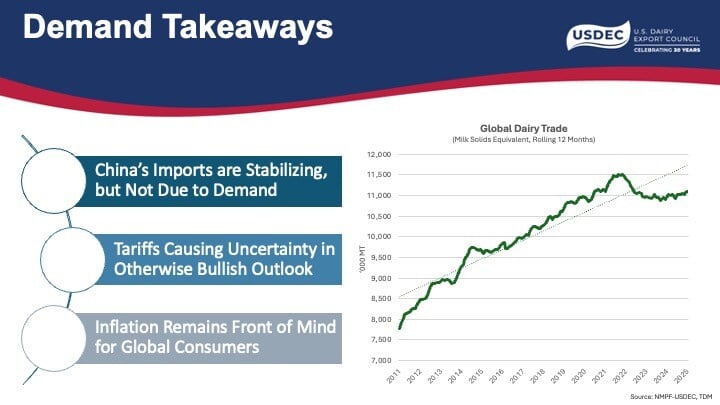
Chinese dairy imports have fallen for three straight years. The country imported 650,000 MT less dairy in 2024 than it did in 2021. But China is showing some signs that import demand is at least stabilizing and could be positioning for a rebound in 2025. However, two of three USDEC economists and three-quarters of attendees expect any change to be less than +8.6%. There are just too many questions around China’s economy to expect much improvement from the world’s largest dairy importer.
The audience also had clear opinions on U.S. cheese shipments to Mexico (69% expect more growth in 2025), total U.S. WPC80+ exports (60% expect growth in excess of +6%) and for U.S. butter exports to grow but probably not more than 30% for the year (63% expect U.S. export volume to undershoot that mark).
Only two questions had the audience split just about 50/50. 1) Global SMP exports to Southeast Asia would rise by 4%. 2) Total U.S. dairy exports will rise by more than 2.2%. In both cases, 51% of the audience picked the over; 49% picked the under.
Strong dairy demand growth in Latin America and Southeast Asia, demand stabilization (or growth) in China, and easing global inflation could create opportunities for U.S. suppliers, USDEC said. But risk remains in the form of tariffs and their potential impact on the global economy and global inflation.
NZ dairy exports roll in February
New Zealand dairy exports continued their hot streak to kick off 2025. February total volume (major products, not including fluid) was a record 272,515 MT, a 4% increase over the previous year (after adjusting for leap year). That’s two consecutive months of record volume.
Cheese and butterfat drove the gain. For the second straight month, New Zealand cheese exports exceeded 39,000 MT. Both January and February shipments were records for their respective months. Year-over-year (YOY) February cheese exports boomed to Japan (+73%, +2,786 MT), China (+36%, +2,854 MT) and Southeast Asia (+68%, +2,613 MT). For butterfat, New Zealand recorded double-digit gains to China (47%, +3,981 MT), Southeast Asia (+33%, +1,930 MT) and the Middle East/North Africa (+37%, +1,356 MT). All numbers have been adjusted for leap year, but all gains were well into double-digits even before adjustments.
Other products also posted solid results. China’s appetite for New Zealand SMP continued strong in February, helping lift overall SMP exports for the month by 3%. For the five months ending in February, New Zealand SMP volume to China rose 32% (+25,527 MT).
The biggest differences between New Zealand’s January and February gains were in WMP. YOY WMP exports fell 6% (-8,527 MT) in February after gains the previous two months. Reduced sales to Algeria and China accounted for the shortfall.
While the decline to Algeria was primarily related to the timing and volume of ONIL tenders and what was a larger Kiwi price advantage over the EU in late 2023, the decline in sales to China is something to watch closely. Kiwi WMP sales to China fell 15% (-6,532 MT) in February after gaining 4% (+4,150 MT) over the previous two months and offering hope for a broader revival.
It's still too early to know whether February was a one-month blip for WMP or the return of a trend. Whether China’s latest economic support plans will help revive the economy and consumption or how the global tariff battle will play out remains to be seen.
Austria shuts dozens of border crossings with Slovakia and Hungary as FMD cases increase
As the number of confirmed cases of foot-and-mouth disease (FMD) in Hungary and Slovakia grew to nine this week (see Global Dairy eBrief, 4/4/25), Austria closed two dozen border crossings with those countries to keep the disease from entering. At the border crossings that remain open, Austrian health authorities are conducting thorough checks and requiring cars and pedestrians to cross over a disinfecting epidemic rug to prevent the virus from spreading. These inspections have caused traffic backups roughly seven miles long on the D2 highway, which leads to the Czech Republic. Slovakia also reintroduced temporary border checks through at least May 8 with Hungary and Austria in response to the escalating outbreak. (Euronews, 4/8/25, 4/6/25; Slovak Spectator, 4/5/25; Pig World, 4/4/25)
Company News
Arla Foods and DMK Group announce merger plans
Denmark-based Arla Foods announced plans to merge with German rival DMK Group in a deal that would create Europe’s largest dairy cooperative, owned by more than 12,000 farmers and with a combined annual pro forma revenue of €19 billion (about US$21 billion). In a joint statement, the companies said the merged entity will carry the Arla name, and current Arla CEO Peder Tuborgh will become head of the company, which will be headquartered in Denmark. They also said the new entity will be “stronger and more resilient in the face of an anticipated decline in overall European milk volumes, through more diversified product portfolios and market positions.” The agreement is subject to board approval, scheduled for June of this year, as well as regulatory approvals, which are expected toward the end of 2025. (Company reports)
Bids land for Fonterra’s consumer business Mainland Group
Following the March 31 deadline and after bankers for New Zealand dairy cooperative Fonterra presented to Sydney fund managers about the ASX listing of its consumer business, Mainland Group (see Global Diary eBrief, 3/21/25), offers have landed from bidders. Suitors include French dairy giant Lactalis and Australia’s Bega Group, which already licenses the use of its brands to Fonterra — which may give it pre-emptive rights in a sale. Other bidders still in the mix include private equity firms Pacific Equity Partners and Warburg Pincus, and investment firms Kohlberg Kravis Roberts and The Carlyle Group. French dairy giant Danone was reportedly in the mix but only bidding for part of the business, making that offer unlikely to progress. (The Australian, 4/3/25)
Lactalis invests to expand cheese, butter production in Brazil
As part of its efforts to boost production of cheese and butter in Brazil, French dairy group Lactalis said it is investing €46.2 million (about US$50 million) in its dairy manufacturing facility located in the southeastern state of Minas Gerais. The announcement follows the company’s November allocation of around $42 million for the same state across seven plants, in a project that stretches through 2026. The company said the new investment round will fund a new manufacturing facility at the state’s Uberlândia site for the local semi-hard cheese variety prato, along with an additional production line for butter. These projects are expected to be completed by 2027. (Just Food, 4/1/25)
Arla Foods Ingredients launches MFGM campaign, concepts
Denmark-based Arla Foods Ingredients launched a campaign to highlight the benefits of milk fat globule membrane (MFGM) beyond the infant formula category. Called Whey360, the initiative follows a Danish Veterinary and Food Administration ruling confirming that MFGM is not classified as a novel food in the EU, which allows for MFGM to be labeled clearly on products for infants and adults. The company said the goal of the campaign is to raise awareness about its MFGM ingredients—which contain whey protein and are a source of essential amino acids, complex milk lipids and other nutrients—and also communicate the potential for MFGM to create functional nutrition products targeting adults, toddlers and older children. To that end, Arla Food Ingredients aims to introduce three concepts featuring MFGM in functional nutrition products for children and adults, including a squeezable cheese, a kids’ UHT drink and high-protein drinking yogurt. (Company reports)
Feihe launches maternity subsidy plan
As China continues to enact birth rate stimulus measures to promote parenting, infant formula maker Feihe is reportedly launching its own nationwide maternity subsidy program this month. The program will provide each eligible family with a subsidy of no less than 1,500 yuan (about US$206). The total investment for the promotion, which equates to about six cans of free formula per family, will amount to RMB1.2 billion (about US$162 million). Analysts predict it could lead to margin reset risks for competitors including Danone, Yili, Friso and a2 Milk Co. (Dairy Reporter, 4/2/25)
Company Briefs
In an effort to help address the issue of undernutrition in school-age children in the Philippines, Switzerland-based Nestlé is expanding its Bear Brand range with a new, “affordable” drink combining powdered milk and soy for school-age children. The product is called Bear Brand Milk N’ Soy. … Nestlé is also expanding its Nescafé Ready-to-Drink cold coffee range to India, the Middle East/North Africa (MENA) region and Brazil as it looks to tap growing demand among Gen Z and Millennial consumers. The range includes varieties like latte, cappuccino and mocha as well as chocolate and caramel flavors. … Wisconsin-based dairy co-op Foremost Farms announced that President and CEO Greg Schlafer resigned his role, effective April 11. Schlafer, who joined Foremost Farms in December 2019, will reportedly “take some time to rest and recharge before his role at another organization begins mid-year.” The company said it was moving ahead with a search for a replacement. … French dairy giant Danone said it plans to shut its Ochsenfurt, Germany, site by the final quarter of next year. The company said production costs at the site are “well above the average of other European Danone plants” and cited “years of inefficiency caused by declining capacity utilization.” … The Dairy Nexus Project, a new research and development facility designed to boost innovation and sustainability in the dairy industry, officially opened at Scotland's Rural College's (SRUC) Barony campus. The facility is funded with £4 million (about US$4.4 million) from the UK and Scottish governments and £738,00 (about US$808,000) from South of Scotland Enterprise. (Company reports; FoodBev Media, 4/8/25; BBC, 4/4/25)
In Case You Missed It...
U.S. Dairy Exporter Blog
Market analysis, research and news subscribe hereUSDEC Twitter feed
Follow us here.