HIGHLIGHTS: APRIL 4, 2025
• Reciprocal tariff plan launched
• USDEC applauds reintroduction of common names bill
• February trade data
• USDEC strengthens dairy ties with Taiwan
• CCFA leadership continues to pay dividends
• Member benefit: Cheese database updated
• Dairy cited throughout NTE report
• Letter cautions USTR on Chinese-built ship fees
• Israel lowers tariffs on U.S. dairy
• Still time to register for membership meeting
• USDEC 2025 activity list
• Market Summary: SMP drives GDP gain
• FMD outbreak growing in Europe
• Company news: Yum Brands, Krispy Kreme, Mother Dairy
Featured
U.S. announces reciprocal tariffs; trading partners react
At press time, U.S. trading partners were beginning to respond to the Trump Administration’s reciprocal tariff plan announced on April 2. That plan levied a 10% additional tariff on all countries effective April 5 (apart from Canada and Mexico, which remain subject to the tariff arrangements announced in early March (see Global dairy eBrief, 3/7/25)).
In addition, individualized higher tariffs will be applied to countries with which the United States has the largest trade deficits. Those tariffs, which go into effect April 9, have been described as based on the average level of tariff and nontariff barriers that other nations impose on U.S. goods.
The Trump administration calculated trading partners’ average tariff rates including “currency manipulation and trade barriers.” The U.S. reciprocal tariffs applied are about half the calculated average. Since the average tariff on U.S. goods to China, for example, is 67%, according to U.S. calculations, the Trump Administration set the new reciprocal tariff on Chinese exports to the U.S. at 34%. Other reciprocal tariffs in key markets include: The EU 20%, Indonesia 32%, Japan, 24%, Malaysia 24%, the Philippines 18%, South Korea 26%, Taiwan 32%, Thailand 37% and Vietnam 46%.
Some goods will not be subject to the reciprocal tariff plan, such as copper, pharmaceuticals, semiconductors and lumber and autos/auto parts covered under the March 26 Section 232 tariffs.
The president maintains authority to modify the tariffs if partners retaliate or “take significant steps to remedy non-reciprocal trade arrangements and align with the United States on economic and national security matters.”
Swift action needed
USDEC President and CEO Krysta Harden called for follow-up action in a joint statement with NMPF issued on April 3.
“President Trump’s commitment to addressing certain unfair and harmful trade policies that American dairy farmers and manufacturers have long faced in the global marketplace can yield positive results if the tariffs announced this week are used as leverage to remedy the various trade barriers facing our exporters,” she said. “A firm hand and decisive approach to driving changes is most needed with the EU and India to correct their distortive trade policies and mistreatment of American agriculture including both imbalanced tariff barriers and nontariff choke-points such as the misuse of Geographical Indications to block sales of our cheeses.
“The strong majority of our trading partner relationships are positive ones; this includes many of the countries that will see higher tariffs imposed on them. We encourage the administration to work swiftly with these constructive partners to negotiate new trading terms that expand opportunities for U.S. exports and secure the elimination of both tariff and non-tariff barriers.”
Most national responses pending
At press time, China announced 34% retaliatory tariffs on all U.S. products. USDEC will provide more details on the move when they are known. Most other major trading partners said they were weighing their response plans, including Brazil, the EU, Japan and Vietnam. Australia said it would try to negotiate to remove the tariffs. The UK said nothing was off the table but it hoped to secure a long-term trade deal with the U.S.
Please see USDEC’s April 3 Member Alert for further details. In addition, for any questions, please contact the USDEC Trade Policy team: Jaime Castaneda (jcastaneda@usdec.org), Shawna Morris (smorris@usdec.org) or Tony Rice (trice@usdec.org). Or contact Bryan Jacoby (bjacoby@usdec.org) with the Market Access Team for questions on Volume 1 of the USDEC Export Guide. (The White House; Wall Street Journal, 4/4/25, 4/3/25; CBS News, 4/2/25; CNN, 4/1/25)
USDEC lauds reintroduction of legislation to protect common names
USDEC cheered the reintroduction of a bipartisan, bicameral bill to strengthen the U.S. response to the EU’s ongoing, aggressive efforts to monopolize common food and beverage names like “parmesan” and “feta” and lock U.S. suppliers out of markets around the world. The Safeguarding American Food and Export Trade Yields (SAFETY) Act replaces the Safeguarding American Value-added Exports (SAVE) Act first introduced in 2023.
The bill was led by Sens. John Thune (R-SD), Tammy Baldwin (D-WI), Roger Marshall (R-KS) and Tina Smith (D-MN) and Reps. Dusty Johnson (R-SD), Jim Costa (D-CA), Michelle Fischbach (R-MN) and Jimmy Panetta (D-CA). It would:
1) Amend the Agricultural Trade Act of 1978 to define common names, directing USDA to establish a list of common names customarily used for agricultural commodities and food products and used in marketing or packaging of products. (This would be the first effort by the U.S. government to elevate protections for common food and beverage names.)
2) Direct USDA to coordinate with USTR to proactively negotiate with U.S. trading partners (through bilateral, plurilateral or multilateral agreements, memoranda of understanding or exchanges of letters) to defend the right to use those common names in their markets.
“When the EU restricts our ability to market and sell our cheeses using ‘parmesan,’ ‘feta,’ and ‘asiago,’ it costs U.S. dairy producers markets and consumers that our members have built up over years,” said Krysta Harden, USDEC president and CEO, in a joint press release on the reintroduction the with NMPF and the Consortium for Common Food Names (which was founded and is staffed by USDEC). “It is past time that the U.S. government takes a more proactive approach to tackling this challenge. A new emphasis on common name protections—headlined by the SAFETY Act—will ensure that our producers can compete on a more level playing field around the world.”
Export volumes fall in February despite cheese, butterfat gains
Year-over-year U.S. dairy exports fell 5% in February (-9,587 MT milk solids equivalent, or MSE) compared to a year ago (after adjusting for leap day) despite cheese setting an all-time record for the month of February.
The main culprit behind the decline was U.S. nonfat dry milk/skim milk powder (NFDM/SMP), which declined by 26% (-16,737 MT). NFDM/SMP volumes to Southeast Asia fell by an astonishing 53% (-12,282 MT), likely caused by U.S. milk powder prices sharply diverging from global levels late last year and into 2025. With February’s decline, U.S. NFDM/SMP exports are the lowest since 2019 on an annualized basis even as it remains the United States’ No. 1 dairy product exported.
In contrast to milk powder’s sluggish performance, U.S. cheese exports maintained their growth trajectory, improving 7% year-over-year (+3,054 MT), led by a surge in volumes to Korea (+50%, +2,090 MT), Australia (+67%, +1,105 MT), MENA (+26%, +695 MT) and the Caribbean (+31%, +599 MT). Weaker sales to China (-58%,-806 MT), Japan (-28%,-1,155 MT) and Mexico (-6%,-952 MT) did little to dampen overall volumes.
The rest of the dairy complex saw similarly mixed results. Total whey exports declined by 5% (-2,364 MT), primarily driven by softer sales of protein. However, dry whey and modified whey (primarily whey permeate) both saw modest gains for the month, though lactose sales softened. Additionally, in a welcome development for cream markets, butter and AMF exports soared (+236%, +6,071 MT) with U.S. butterfat at a significant discount to product from Europe and Oceania.
For more on the February numbers, including deeper dives into butterfat and dairy proteins, read the U.S. Dairy Exporter Blog story, “Weaker milk powder sales weigh on otherwise positive dairy exports.” In addition, check out the interactive charts in the USDEC Data Hub under the Exports tab.
Taiwan mission looks to foster relationships, increase market access for U.S. products
USDEC was in Taiwan this week on a three-day mission aimed at strengthening ties with government policymakers, the local dairy sector, retailers and buyers. Jaime Castaneda, executive vice president, Policy Development and Strategy, and Tony Rice, director, Trade Policy, were joined by the California Milk Advisory Board’s (CMAB’s) incoming CEO, Bob Carroll, for a series of meetings with the Taiwan International Trade Administration (a department of the Ministry of Economic Affairs), the Ministry of Agriculture, the American Institute in Taiwan (the de facto American Embassy), the Dairy Association of Taiwan and several additional entities and buyers involved in dairy and trade.

The USDEC delegation meeting with leadership of the Taiwan Ministry of Economic Affairs’ International Trade Administration.
The objectives for the trip were threefold: First to impress upon the government and local dairy industry representatives the strong desire to collaborate for the benefit of dairy producers, industries and consumers in Taiwan. It’s a message USDEC consistently reiterates in partner nations.
Second, that America is invested in Taiwan and it deserves treatment equal to that given to New Zealand.
“We wanted to reinforce that U.S. dairy exports should not be at a competitive disadvantage to New Zealand products,” said Castaneda.
And third, that the U.S. is a reliable supplier for all dairy products, from fluid milk to cheese to ingredients.
“We aimed to build trust and encourage the Taiwanese government and industry to negotiate with the U.S. government to lower tariffs for the U.S.,” said Castaneda.
The mission highlighted the United States’ strong commitment to supplement local milk production with more capacity added for extended shelf-life milk as well as cheese—and the desire to collaborate with the local industry to enhance consumer demand for milk and milk products. The USDEC delegation also positioned U.S. dairy as a high-value contributor to Taiwan’s food security.
“CMAB’s participation on the trip helped to demonstrate unity across the U.S. dairy industry during USDEC’s face-to-face engagement with Taiwanese government officials,” said Castaneda. “We strongly believe that this investment will help U.S. farmers increase their exports to Taiwan.”
In addition to the meetings noted above, the delegation also met with importer Food Fashion Co., Costco Wholesale Taiwan, Kuang Chuan Dairy Co., dairy and nutrition products company Standard Foods Group, the American Chamber of Commerce in Taiwan, the General Chamber of Commerce of the Republic of China, and the Taiwan Association of Logistics Management.
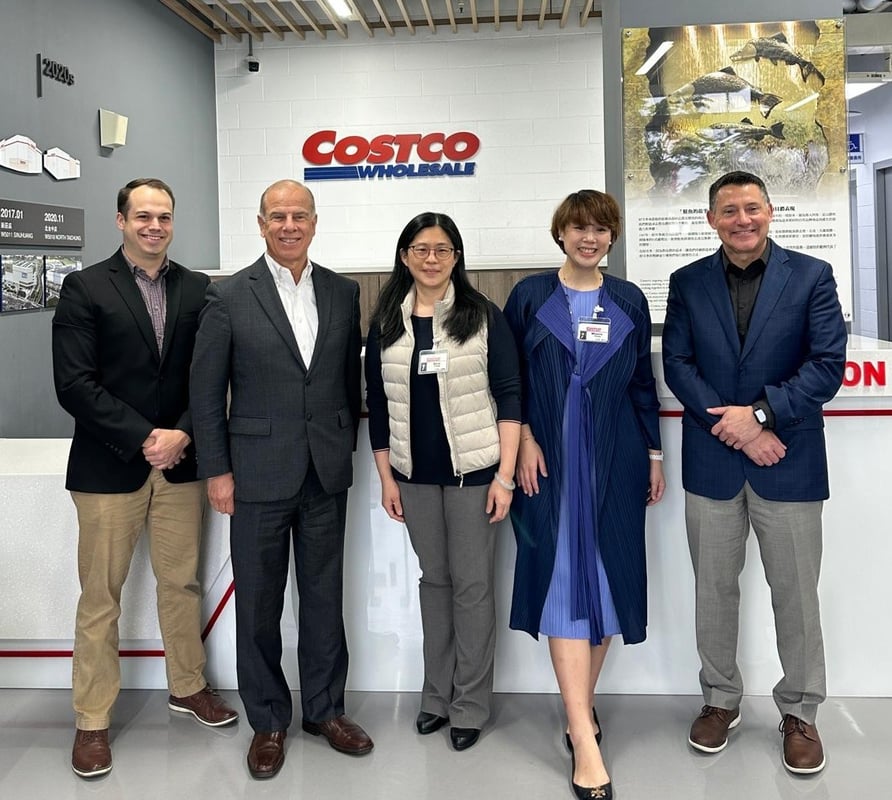
The USDEC delegation at Costco Wholesale Taiwan headquarters.
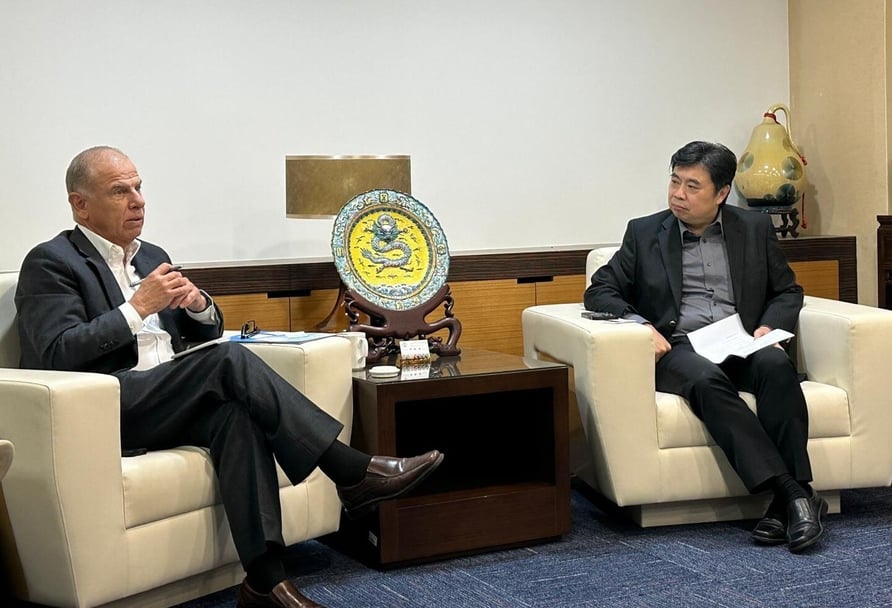
Jaime Castaneda talks with Jack Lin, secretary general, Taiwan General Chamber of Commerce.
Long-standing participation in CCFA continues to pay dividends to U.S. dairy suppliers
The March 24-28 Codex Committee on Food Additives (CCFA) meeting in Seoul delivered a series of positive developments for U.S. dairy, including progress on the General Standard for Food Additives (GFSA) and the removal of subjective and value-based language about cell-based foods from official Codex documents. That progress has only been possible due to USDEC’s long-term involvement in CCFA.
USDEC’s Nick Gardner, senior vice president, Sustainability and Multilateral Affairs, and Eddy Fetzer, vice president, Market Access and Regulatory Affairs, were present in South Korea to maintain U.S. dairy’s strong presence with the Committee and to inform the decisions made to facilitate U.S. dairy exports.
A major throughline in Seoul was the progress made in recent years populating food additive provisions in the GFSA. After addressing a backlog of several thousand provisions, the CCFA is now considering where it will focus next. "Other business and future work" was a hot topic at the meeting.
Good news on multiple fronts
Notable developments included:
- USDEC supported the International Dairy Federation priority to clean up GSFA notes for certain additives in dairy products. Such clarification is needed to prevent misinterpretations that could undermine the quality of high-value dairy products or lead to potential trade barriers.
- The use of paprika extract, a color additive, was approved in dairy spreads. Several other color provisions were restricted for use in dairy products where the use of colors is not permitted in standardized products.
- USDEC worked closely with the U.S. delegation to remove subjective language that characterized cell-based foods as better or more sustainable than conventional dairy and meat products. CCFA agreed to establish a working group to revise a draft proposal on food safety assessment of cell culture media components in cell-based food production. The group will look to develop categorization for cell culture media components and the evidence necessary for a safety assessment and then identify specific areas where FAO and WHO scientific advice would be needed to develop risk assessment frameworks for the products. Its work will be presented at the next CCFA meeting in April 2026.
Continued participation critical
Global food standards set by Codex level the playing field and help U.S. dairy suppliers compete on the international stage. They are more important than ever, given that some countries have stepped up efforts to align global guidelines with national policies to advance trade interests.
U.S. dairy benefits by having a voice at the table advocating for science-based food safety standards that support innovation, expand market opportunities for U.S. dairy and make food systems safe, resilient and sustainable.
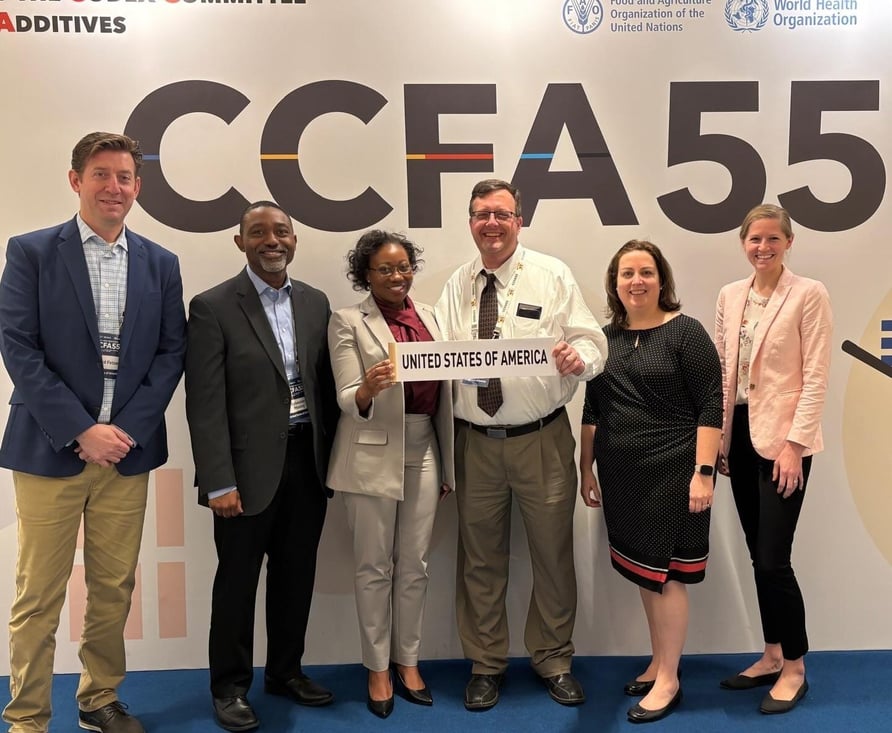
USDEC’s Eddy Fetzer (left) with the U.S. Codex delegation at March’s meeting of the CCFA.
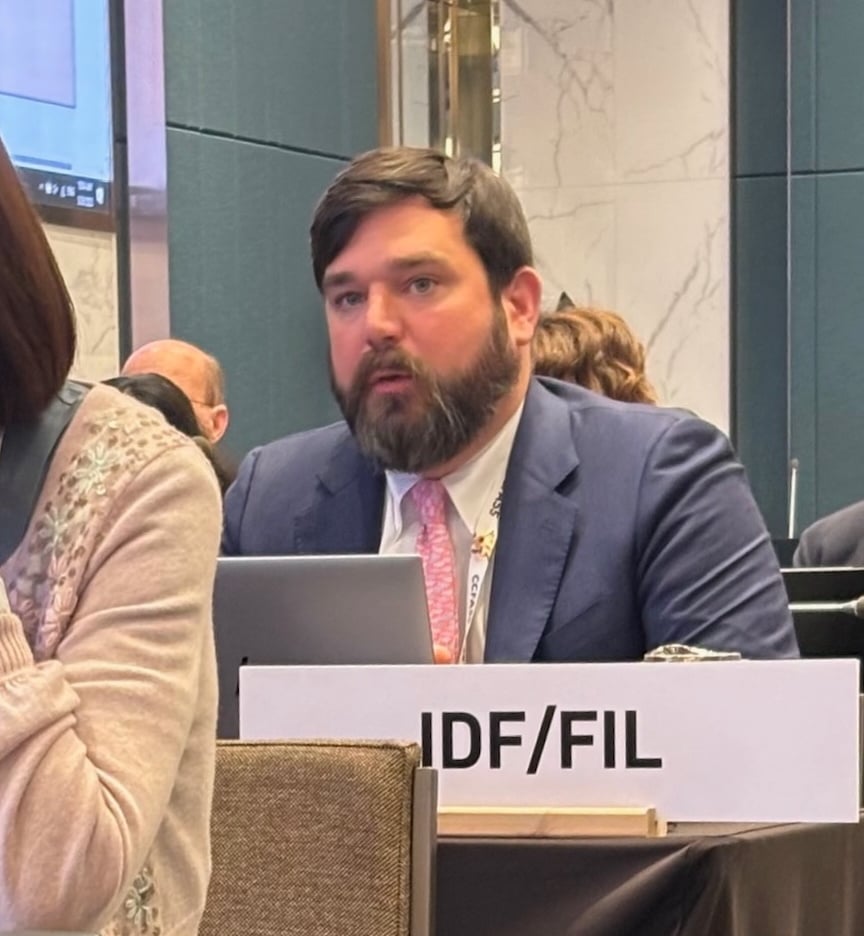
Nick Gardner, who is completing his first term as chair of the United States National Committee of the International Dairy Federation, making an intervention during session at the CCFA meeting.
Global cheese trade: fresh data for 33 markets
USDEC’s Strategic Insights team released updated estimates in the Global Cheese Database with 2024 full-year trade data. This unique, members-only analytical tool provides varietal level consumption, production, and trade volumes for 33 countries on historic and forecast bases through 2026.
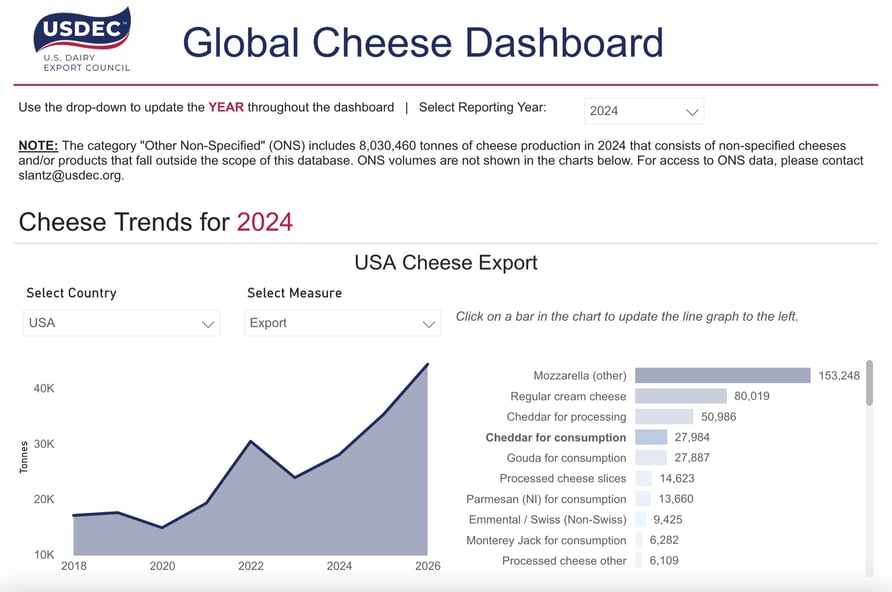
A few key updates we are seeing in the 2024 full-year figures include:
- Double-digit growth in U.S. cheddar exports.
- Declining Egyptian cheese exports due to local supply shifts.
- Notable increases in imports for Brazil and the Dominican Republic.
- Rebounding Australian exports from improved price competitiveness.
For more insights, visit the Global Cheese Database in the link here. If you have questions or would like access to raw data, please contact Scott Lantz at slantz@usdec.org.
USTR report highlights barriers to U.S. dairy trade
On March 31, the USTR’s Office released the 40th annual National Trade Estimate (NTE) Report on Foreign Trade Barriers. The NTE Report provides a comprehensive review of significant foreign barriers faced by U.S. exporters and USTR’s efforts to reduce those barriers.
The influence of USDEC and NMPF on the report is evident. The 367-page document covers 59 key U.S. export markets and regions, highlighting numerous impediments to dairy trade drawn from 45 pages of joint comments submitted last October by the two U.S. dairy organizations. Milk, dairy and cheese are cited more than 150 times.
The report calls out Canada’s faulty tariff rate quota allocation process, India’s health certificate requirements, the EU’s abuse of its geographical indications system to monopolize common names, numerous dairy import certification requirements not based on science, and several other dairy-specific trade barriers, including facility registration requirements.
Letter cautions on USTR’s proposed fees on Chinese built ships
Fifteen U.S. senators co-signed a letter to USTR Jamieson Greer expressing concern about “the unintended but damaging consequences” of a proposed set of actions to discourage reliance on Chinese shipping and help revive the U.S. shipbuilding industry (see Global Dairy eBrief, 2/28/25). Specifically, the letter questions the plan to charge fees of up to $1.5 million every time a Chinese-built ship docks at a U.S. port. The fee proposal, as written, would have significant negative ramifications not only on U.S. carriers but also industries and economies across the country, including agriculture.
Given that the majority of container ships and bulk vessels that transport U.S. agricultural exports were built by China (with only 10 container ships built by the U.S. between 2010 and 2023, and only 14 U.S.-built bulk vessels currently available), “it may not be feasible at this time for U.S. businesses and carriers to immediately use only U.S. vessels,” the letter states.
Rather than support U.S.-owned carriers and U.S.-flagged ships, the proposal as written would make them subject to fees based on where the ships were built.
“Imposing large fees on U.S.-owned carriers would tilt the field in favor of foreign-owned carriers. Moreover, any fees that are imposed may be passed on to the exporter and put them at a competitive disadvantage,” the senators wrote.
In addition, the fees could lead to fewer trips or shippers forgoing American ports altogether, which would impact both ports jobs and railroad jobs.
USDEC and NMPF support the letter, which was coordinated by Sen. Jerry Moran (R-KS), and worked to gather signatures.
Israel eliminates all tariffs on U.S. products, including dairy
On April 1, the Israeli government issued a statement announcing the elimination of tariffs on all exports from the United States, including any dairy products that hadn’t already carried zero tariffs under the U.S.-Israel Free Trade Agreement. The move, which Israel called “a complementary step to trade relations between the countries,” had been scheduled to take effect today and was made at Israel’s discretion. The U.S. government will be working with them to try to make the eliminations permanent. (USDEC staff; Israeli government)
Last chance to register for next week’s USDEC Annual Membership Meeting
You can still register for USDEC’s Membership Meeting that takes place April 7-9 at the Willard Hotel in Washington, D.C. If you have any questions about registration, the agenda or anything else, please contact Weston Abels at wabels@usdec.org. We hope to see you in Washington!
Events
USDEC booth debuts at Expo Carnes y Lacteos
USDEC hosted a booth for the first time at this year’s Expo Carnes y Lacteos exhibition and conference in Monterrey, Mexico. While the show has traditionally focused primarily on the Mexican meat sector, its dairy footprint has been growing in recent years and major dairy buyers are attending. USDEC staff met with 42 companies at the USDEC booth, including Sigma Alimentos, Grupo Bafar, and Qualtia Alimentos.
In addition to exhibiting at Expo Carnes y Lacteos, USDEC also held three U.S. dairy ingredients training workshops in Monterrey in conjunction with the show. For more information on those workshops, see the March 28 issue of Global Dairy eBrief.

USDEC Mexico office staff members at the Expo Carnes y Lacteos booth. Left to right: Ana Acevedo (the latest addition to the Mexico office), Edgar Garcia and Javier Roldan.
USDEC 2025 events
For your convenience, USDEC has compiled a chronological list of dairy export-related member events currently slated for 2025. This list is effective as of April 4 and will evolve as new opportunities develop, funding is finalized, or unexpected changes arise.
APRIL
- USDEC Annual Membership Meeting, Washington, D.C., April 7-9, 2025
- Ingredients Advisory Group, Washington, D.C., April 9, 2025
- Cheese and Consumer Products Advisory Group, Washington D.C., April 9, 2025
- Food and Hotel Asia Tradeshow, Singapore, April 8-11, 2025
MAY
- Southeast Asia U.S. Dairy Proteins Healthy Active Aging Innovation Workshop, Singapore, May 7-8, 2025
- China Bakery Exhibition, Guangzhou, May 10, 2025
- USDA Agribusiness Trade Mission, Hong Kong, May 12-16, 2025
- China Animal Husbandry Expo (CAHE), Qingdao, May 19-21, 2025
JUNE
- USDA Agribusiness Trade Mission, Peru, June 9-12, 2025
- Seoul Food and Hotel Trade Show, Seoul, June 11-14, 2025
- International Cheese and Dairy Awards, Stafford, England, June 25-26, 2025
JULY
- USDA Agribusiness Trade Mission, Dominican Republic, July 13-16, 2025
- Expo IAlimentos, Colombia, July 30-31, 2025
AUGUST
- Food Ingredients South America, Brazil, Aug. 26-28, 2025
SEPTEMBER
- U.S. Dairy Supply Seminar, Sept. 11, Ho Chi Minh City, Vietnam
- U.S. Dairy Supply and Innovation Seminar, Thailand, Sept. 15, 2025
- Food Ingredients Asia, Thailand, Sept. 17-19, 2025
- Espacio Food and Service, Chile, Sept. 30-Oct. 2, 2025
OCTOBER
- U.S. Dairy Innovation Seminar, Oct. 2, Ho Chi Minh City, Vietnam
- USDEC Sustainability Seminar, Singapore, Oct. 7-8, 2025
- Food Tech Summit & Expo, Mexico, Oct. 8-9, 2025
- IDF World Dairy Summit, Chile, Oct. 16-25, 2025
- Ingredients Advisory Group Tactical Plan Meeting, Chicago, Oct. 21, 2025
NOVEMBER
- USDA Agribusiness Trade Mission, Mexico, Nov. 3-6, 2025
- U.S. Dairy Protein Nutrition Seminar, Nov. 4, São Paulo, Brazil
- Gulfood Manufacturing, Dubai UAE, Nov. 4-6, 2025
- COP30, Brazil, Nov. 10-21, 2025
- World Cheese Awards, Bern, Switzerland, Nov. 13-15, 2025
DECEMBER
- USDA Agribusiness Trade Mission, Cote D’Ivoire, Dec. 8-11, 2025
- 4th Quarter Joint USDEC Meeting of the Cheese and Consumer Products Advisory Committee and the Trade Policy Committee Meeting, Washington, D.C., Dec. 10-11, 2025
Market Summary
SMP leads GDT to first gain in four auctions
The Global Dairy Trade (GDT) Price Index rose 1.1% at the April 1 auction. SMP led the gain, with the average winning price jumping 5.9% to US$2,876/MT—nearing a two-year high. While a reduction in allocated SMP volumes by Fonterra Co-operative Group heading into the auction contributed to the gain, the magnitude of the increase was a surprise and welcome development.
The EU was the top SMP buyer for the third straight auction but bought less SMP than at the previous auction as competition drove up prices. Both North Asia (China) and Southeast Asia increased SMP volumes—along with their overall auction demand. Chinese overall purchasing rose by 4 percentage points, and China led WMP, butter and cheddar buying. Southeast Asian overall volume bought rose by 6 percentage points, and it led AMF purchasing and was a top player in all other major product categories.
Uncertainties related to global trade policy (in general) and the U.S. reciprocal tariff plan (specifically) continue to support GDT prices. The auction took place just a day before the Trump Administration announced its reciprocal duties.
Other results from the auction include:
- Cheddar rose 1.7% to US$5,018/MT. It was the fourth straight gain, closing in on a two-year high.
- After two consecutive significant price increases, mozzarella corrected course, falling 4.0% to US$4,517/MT.
- After finishing with three straight record highs in the previous three auctions, butter eased 1.2% to US$7,602/MT.
FMD detected in Slovakia as outbreak grows in Hungary
Weeks after foot-and-mouth disease (FMD) was confirmed in Hungary near the Slovakian border (see Global Dairy eBrief, 3/14/25), an additional outbreak was reported in Hungary, and officials in Slovakia said cases of FMD had been detected at five farms in the country. Slovakia declared a state of emergency that will make it easier to enact measures to prevent the spread of the infections, which are the first cases detected in the country in 50 years. These measures include a ban on entry into breeding areas and increased hygiene standards when entering and exiting breeding areas. Both the Hungarian and Slovakian governments have deployed members of their militaries to assist in decontamination efforts.
In response to the outbreaks, the British government has banned the import of live cattle, fresh meat and dairy products—unless treated to inactivate FMD—from Hungary and Slovakia. Austria is also included in these restrictions because a protection zone around the Hungarian FMD cluster extends partly into Austria. As previously reported in Global Dairy eBrief, officials in the UK lifted restrictions on imports of German meat and dairy imports after the country contained a January FMD outbreak there, except for goods originating in the containment zone. The World Organisation for Animal Health has granted Germany FMD-free status outside of the outbreak “containment” zone, which will remain in effect until at least April 11. (Reuters, 4/1/25, 3/21/25; Agriland, 3/26/25; Farming UK, 3/28/25)
Market Access and Regulatory Affairs
Latest changes to the USDEC Export Guide
The MARA team updated or revised 148 documents in the USDEC Export Guide in March. Here are some highlights:
Volume 1: Tariffs and Classification
- Brazil: Tariffs on most cheese lines increased from 14.4% to 16%.
- Nigeria: Federal VAT exemption is noted for fluid milk (0401), concentrated milk, including milk powder (0402), whey products (0404), and lactose (1702.11).
- UK: The Free Trade Agreement with Comprehensive and Progressive Agreement for Trans-Pacific Partnership (CPTPP) countries entered into force on Dec. 15, 2024, granting imports from Australia and New Zealand preferential tariffs.
Volume 2: Import Requirements
- Colombia: Sanitary Import Permit section notes that the Colombian Agricultural Institute (ICA) has imposed new restrictions for import permit modifications. Starting May 17, 2025, no changes will be allowed after the products have left the port or origin.
- Egypt: Egypt has updated its Halal regulation to exclude imported milk and dairy products from the halal certification requirement.
- Japan: APHIS Veterinary Certificates are revised to include the words “listed country” instead of listing the countries where the product originated. This change was due to FMD outbreaks in several countries.
Volume 3: Labeling and Product Standards
- Israel: Following the adoption of several EU regulations in 2024, most standards, the food additive document, and the labeling document were updated to incorporate new requirements.
- Singapore: Added clarification that imports are not subject to the combustible dust warning on milk powder.
- Turkey: All compositional standards include updated microbiological criteria.
Every month, USDEC’s Market Access team emails a list of guide updates to interested members. If there is anyone at your company who should be included on the distribution list for that email in the future, please contact Jessica Smith at jsmith@usdec.org.
Company News
Mergers, acquisitions and joint ventures
In a move to strengthen its presence in the U.S. food market, California-based Marquez Brothers International (MBI) reached an agreement to acquire Florida-based Hato Potero Farms, the maker of drinkable yogurt brand YoGusto. (Company reports)
Company Briefs
Yum Brands CEO David Gibbs announced he plans to retire in the first quarter of 2026. A company board spokesman said the board “is committed to overseeing a thorough succession planning process” to replace Gibbs, who has served as CEO since January 2020 and been with the company for nearly 40 years. … India’s Mother Dairy will invest Rs 1,400 crore-Rs 1,500 crore (about US$164 million-$176 million) to boost its production capacity by enhancing its existing 12 plants and adding three new ones. The company said it is also launching several new products to meet increasing demand. … North Carolina-based doughnut chain Krispy Kreme is continuing its global expansion with the launch of its first restaurant in São Paulo, Brazil, later this month. The launch is a partnership with Brazil’s largest convenience store operator, AmPm. … Yum Brands’ Taco Bell operation said it expects to nearly triple its international unit count from 1,100 to 3,000 by 2030. As part of its international growth plans, the company said it is working with major operating partners in India and Spain and building a presence in Latin America while investing in company-operated restaurants in key markets, including the UK. … At its annual investor day, Oregon-based coffee chain Dutch Bros. Coffee said the company believes there is potential for more than 7,000 stores in the U.S., up from its previous forecast of 4,000, and it is aiming to double its current store count to 2,029 outlets by 2029. … French biotech company Bon Vivant officially rebranded itself to Verley and introduced a line of proteins produced through precision fermentation that mimic the proteins found in cow’s milk. The new product line is called FermWhey and includes three specialized proteins: FermWhey Native, FermWhey MicroStab, and FermWhey Gel. (Company reports; Financial Express, 3/26/25; Restaurant Business, 3/28/25, 3/21/25; Nation’s Restaurant News, 3/24/25; Protein Production, 3/27/25)
In Case You Missed It...
U.S. Dairy Exporter Blog
Market analysis, research and news subscribe hereUSDEC Twitter feed
Follow us here.