HIGHLIGHTS: May 9, 2025
• Taiwan dairy ingredient program kicks off
• U.S. dairy exports rebound in March
• U.S., UK agree to trade framework
• Some dairy products on proposed EU retaliation list
• Report from trade mission to Philippines, Malaysia
• New USDEC consumer research on Southeast Asia
• South Korean dairy protein workshop
• New USDEC website features
• USDEC welcomes new members
• USDEC 2025 events calendar
• Market Summary: GDT surges
• Declining container ship traffic bodes ill
• New Foremost CEO
• More suitors for Fonterra businesses
• Lactalis makes Portugal acquisition
• Chinese dairy company results
• Company briefs: Bega, La Serenísima, Glanbia, K Coffee
Featured
New Taiwan dairy ingredient program off to a strong start
USDEC’s new dairy ingredient marketing programs in Taiwan started in high gear last week with two activities to introduce USDEC and U.S. dairy health and nutrition benefits to local industry and nutrition professionals.
- On May 2, USDEC hosted a Health and Wellness seminar for food and beverage importers and manufacturers.
- On May 2-3 exhibited with a tabletop booth at the Nutrition Society of Taiwan’s annual meeting.
The decision to add Taiwan to the list of priority markets targeted for ingredient marketing programs was a direct result of USDEC member interest and feedback. In two consecutive surveys conducted in 2021 and 2023, USDEC Ingredients Advisory Group (IAG) members overwhelmingly ranked Taiwan as the No. 1 new destination they would like to see USDEC pursue expanded activities. The availability of USDA Regional Agricultural Promotion Program (RAPP) funding, which is being used for ingredient marketing programs on the island, made this hope a reality.
“Taiwan is a health-conscious market with a dynamic and innovative food and beverage sector whose needs aligns perfectly with U.S. dairy ingredient advantages,” said Kristi Saitama, vice president, Global Ingredients Marketing. “There is bright potential to grow demand and diversify usage of U.S. dairy ingredients in health and wellness positioned products for a protein-forward, well-being lifestyle.”
Full-house seminar shows eagerness
The May 2 USDEC ingredient seminar drew an enthusiastic group of food and beverage importers and manufacturers eager to hear the latest market trends for dairy protein products and the nutrition science behind their health and wellness positioning. A robust Q&A session at the seminar’s close, dialogue with participants over lunch, and direct feedback to USDEC Taiwan office representatives indicated that the 36 attendees highly valued the information shared and that the market provides potential for U.S. dairy protein export expansion.
A series of presenters made the case for U.S. dairy protein in Taiwan. Rosaline Chen, USDEC Taiwan’s office lead and vice president, opened the seminar by relaying USDEC’s excitement to initiate ingredient marketing programs in Taiwan and support local customers. Terry Chang, USDEC Taiwan’s marketing manager, provided an introduction on USDEC and why the United States is an ideal supply partner. He highlighted U.S. dairy farming practices and stressed the broad portfolio of U.S. dairy ingredients and U.S. innovation expertise—well-suited to meet Taiwan’s current and future import and needs.
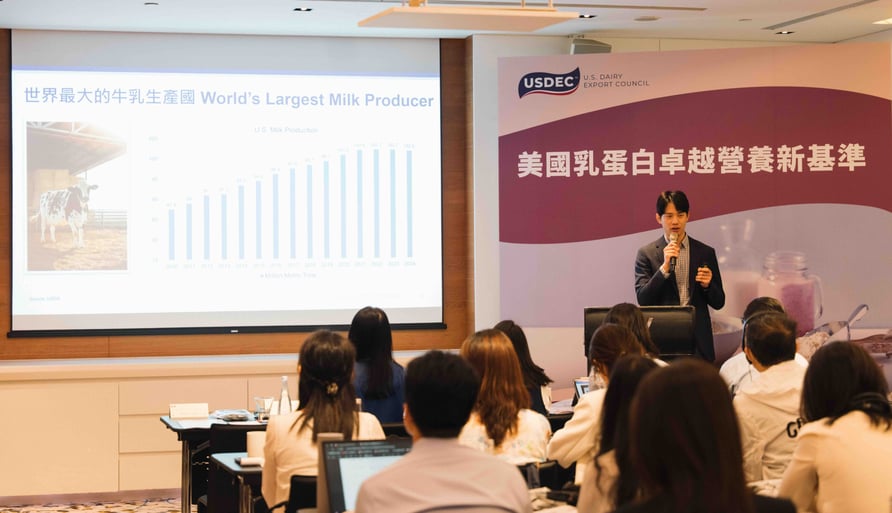
USDEC Taiwan Marketing Manager Terry Chang sets the stage by introducing why the United States—through its large and growing milk supply and broad dairy ingredients portfolio—is well positioned to meet Taiwanese customers’ product and innovation needs.
Registered dietitian Leslie Bonci, owner of the nutrition consultancy Active Eating Advice, delved into the value of protein in a healthful diet, how protein sources are not all the same nutritionally, and why protein quality and intake timing—not just quantity—matters. Protein needs differ based on lifestyles and life stages, she said, explaining the science-backed benefits of U.S. dairy proteins to live long and strong.
Her emphasis was on achieving “optimal” (rather than “adequate”) nutrition that complete dairy proteins can provide, in contrast to some plant and alternative protein sources. To illustrate this point visually, she conducted a demo highlighting dairy protein’s high leucine content compared with some common foods and other protein sources. (Leucine is an essential branched chain amino acid necessary to initiate muscle protein synthesis.)
For example, it would take about six large eggs or five scoops of collagen powder to match the 3g of leucine in just one scoop of WPI. The demonstration brought home the fact that a person would have to consume a much greater volume of food and substantially more calories (and likely pay more) to get the same nutrition provided by dairy protein.
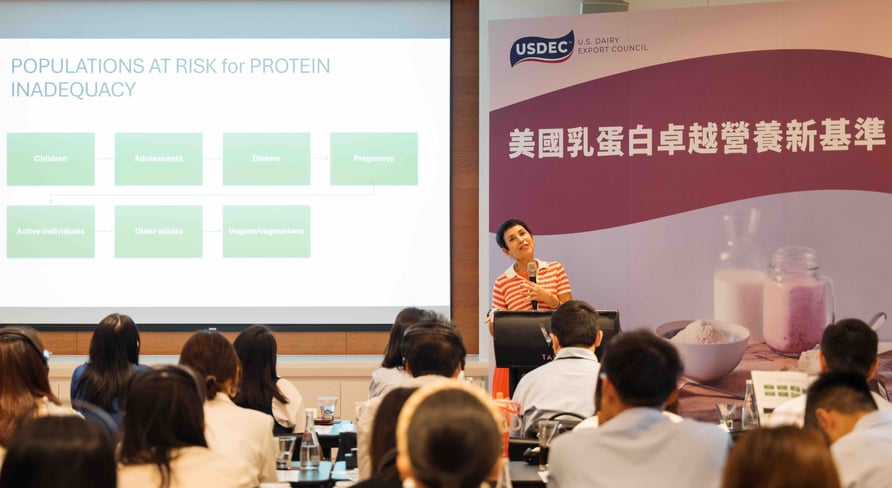
Leslie Bonci spotlights how to achieve optimal—rather than just adequate—protein intake throughout the day with U.S. dairy proteins across life stages.
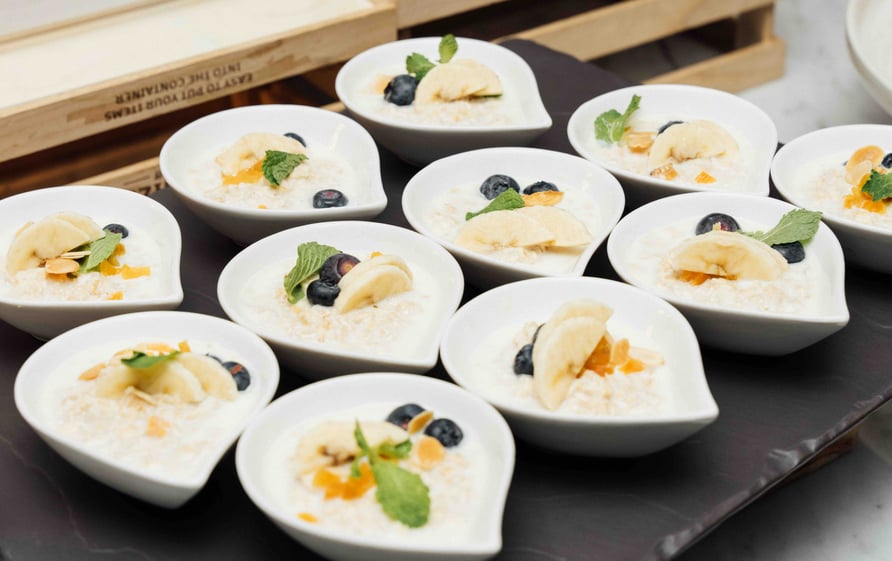
USDEC treated seminar participants to Taiwan-friendly dishes made with U.S. dairy ingredients, such as this banana-apricot protein oatmeal with almonds. The products, ideated by Bonci and the chef from the Taipei W Hotel, showcased the innovation and market potential of U.S. dairy.
Kristi Saitama, USDEC’s vice president, Global Ingredients Marketing, highlighted the innovation potential for U.S. dairy proteins in Western and Asia-friendly applications for everyday health and wellness. This included both existing commercial products as well as several Taiwan-friendly prototype concepts developed by USDEC offices in Southeast Asia, Japan and Korea.
During a coffee break participants got to taste three menu items (banana apricot oatmeal, fish congee with ginger, and lemon mascarpone protein pancake topped with salmon and caviar) made with U.S. dairy proteins. A display of real U.S. and Asian commercial products made with dairy proteins—including pancake mixes, oatmeal, protein bars, balls and bites, protein sweet treats and savory snacks—provided further ideas for dairy-protein products not yet made or available in Taiwan.
Conference connects with local nutrition community
On May 2-3, USDEC exhibited alongside other nutrition-minded companies at the Nutrition Society of Taiwan’s 51st annual meeting. Themed “Sustainable Diet for Public Health Nutrition,” the conference brought together nutrition community leaders and practitioners as well as nutrition students for scientific lectures and posters sessions. Staff at the USDEC booth engaged with attendees to introduce U.S. dairy protein advantages for sarcopenia risk reduction, weight management and more while reinforcing why dairy protein stands out for nutritional quality vs. other non-dairy sources. It was a valuable start to establishing new relationships and raising awareness of USDEC as a resource on dairy protein health benefits to the local nutrition community.
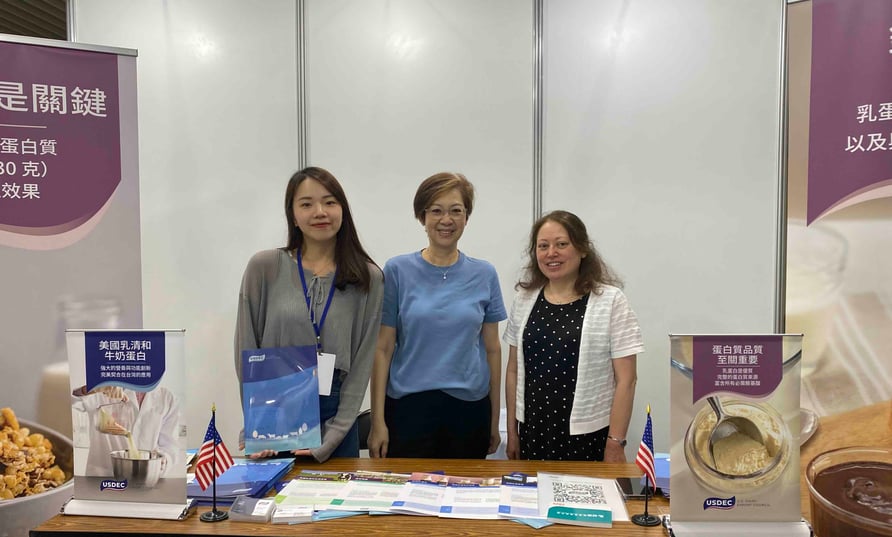
Left to right: USDEC Taiwan team member Kae Yang, Vice President Rosaline Chen and USDEC Arlington’s Kristi Saitama, share U.S. dairy proteins’ nutritional benefits at the Nutrition Society of Taiwan’s 51st annual meeting.
Taiwan – What’s Next?
The next major USDEC ingredient events in Taiwan include exhibiting at the Asia Healthcare Expo July 24-27 and hosting the U.S. Dairy Protein Trade and Innovation Seminar on Sept. 30. Both events take place in Taipei. Staff invites USDEC members to participate in the September seminar to engage with customers and demonstrate the U.S. dairy community’s interest and commitment to Taiwan.
Additionally, many USDEC marketing materials are also newly available in Chinese (traditional) to support both USDEC and member engagement with Taiwanese customers. These resources can be accessed on the Resources and Insights page on ThinkUSAdairy.org.
“With U.S. dairy ingredients now gaining stronger visibility on local buyers’ and end-users’ radar, demonstrating our industry’s interest, commitment and follow-through in supplying Taiwanese customer needs is critical to build a positive image and reputation,” said Saitama. “We appreciate members’ support in responding to product inquiries from Taiwan and affirming the United States is the best-choice supply partner to meet Taiwan’s market needs.”
For more information, contact Suzanna Stohr (sstohr@usdec.org) or Kristi Saitama (ksaitama@usdec.org).
March U.S. dairy exports are most in over two years
Year-over-year (YOY) U.S. dairy exports (milk solids equivalent or MSE) grew 3% in March. March shipments marked the highest monthly U.S. dairy export volume since February 2023.
The March increase almost brought the first-quarter back to even. Through the first three months of 2025, total U.S. dairy exports lagged the previous year by just 0.5%. U.S. export value over the same period grew 14% to $2.3 billion—a first-quarter record.
Most major products gained or at least held their own in March. Among the highlights:
- Nonfat dry milk/skim milk powder (NFDM/SMP) had its best month since last summer.
- Butterfat continued to surge.
- Chinese low-protein whey buyers rushed to beat retaliatory tariffs.
- U.S. cheese posted its second-best month ever, falling just short of the monthly record that was set exactly a year earlier.
YOY U.S. low-protein whey shipments grew 3% (+1,351 MT), as China stocked up on U.S. whey before the biggest retaliatory tariff hikes took hold. China began applying an additional 10% retaliatory tariff on U.S. dry whey and whey protein concentrate in mid-March, even as U.S. whey permeate remained exempt from that increase. However, all three products ran into an additional 125% tariff in early April.
Buyers who got in under the wire drove total YOY U.S. low-protein whey exports to China by 34% (+5,784MT) in March—in line with the year-to-date (YTD) trend. While those are hefty gains, it would be extremely surprising if demand continued to weather the full weight of the retaliatory tariffs that started in April.
After 14 straight monthly YOY gains, U.S. cheese exports declined 1% (-734 MT) in March. It was nonetheless a solid performance. At 49,287 MT, U.S. March exports would have trounced just about every month on record. Export volume was the second highest in history—but it was up against the highest month in history: March 2024, when U.S. suppliers shipped a record 50,022 MT.
U.S. NFDM/SMP exports ticked up slightly in March (+1%, 909 MT) making for the first positive month of YOY trade in six months. Most of the growth came from increased volume to Mexico (+27%, +7,213 MT)—although that gain was aided by relatively low export volume in March 2024. Exports to SEA (-20%, -4,467 MT) and MENA (-79%, -2,559 MT) were down in March continuing the trends we’ve seen in both regions over the last six months.
For a deeper dive into the numbers, including expectations for cheese, NFDM/SMP and butterfat, read the U.S. Dairy Exporter Blog story, “U.S. Dairy Exports rebound in March.” Also check out the interactive charts in the Exports section of the USDEC Data Hub.
U.S., UK agree to trade framework, ag details still to be negotiated
This week, the White House announced that the U.S. and UK had agreed on a framework to negotiate a new “Economic Prosperity Deal” or EPD. The Trump Administration released a five-page document providing more information on the EPD, which aims to remove trade barriers and strengthen trade between the two nations.
Essentially, the five-page document lays out a framework for further negotiations, including on agriculture.
The Agriculture section reads as follows: “The United Kingdom and the United States plan to work constructively in an effort to enhance agricultural market access. Further, both countries positively support future discussions to strengthen bilateral agricultural trade. The United Kingdom and the United States affirm that imported food and agricultural goods must comply with the importing country’s sanitary and phytosanitary (SPS) standards and other mutually agreed standards. The United Kingdom and the United States commit to working together to improve market access for agricultural products, to highlight concerns, and to increase agricultural cooperation on areas such as certain export verification programs to facilitate greater trade, and more formal bilateral engagement through international standard setting bodies.”
A separate fact sheet released by the White House also references certain areas of cooperation and highlights potential agricultural market access, including new opportunities valued at “$250 million in [non-ethanol] agricultural products, including beef.” However, the fact sheet does not include specifics on any agricultural tariff or non-tariff barriers that the UK is agreeing to reduce or eliminate (beyond $700 million in access opening related to ethanol trade).
USDEC has been actively conveying the export potential the UK dairy market offers to the U.S. government and urging an expansion of access for U.S. products. We will announce further developments as they become known. Please contact Tony Rice at trice@usdec.org with any questions.
Dairy on proposed EU list of U.S. products for retaliation
The EU is seeking comment on a list of U.S. imports that could be subject to retaliatory duties if negotiations between the two parties fails to deliver an agreement. The list omits tariff lines 0401-0406 but it does include a handful of other common dairy HS Codes as well as several dairy-containing tariff lines (including chocolate and confectionery items). Dairy products specifically mentioned as potential tariff targets include lactose (17021100 and 17021900); food preparations for infant use (19011000); and high-protein concentrated dairy proteins (35040010 and 35040090).
Stakeholders affected by the proposed measures have until June 10 to submit comments. After reviewing the input, the European Commission will finalize its proposal for the adoption of countermeasures and consult with member states. Should negotiations with the U.S. not yield an agreement, it might then implement the countermeasures.
Mission to Malaysia, Philippines and Hong Kong scouts opportunities, reassures buyers of U.S. dairy commitment
This week, USDEC President and CEO Krysta Harden and USDEC Chair Becky Nyman noted significant market opportunities for U.S. dairy exports during their visit to the Philippines and Malaysia.
The Philippines has been a success story for U.S. dairy exports, with U.S. shipments in milk solids equivalent terms rising 38% from 2015 to 2024. It stands as the largest market for U.S. dairy exports in Southeast Asia.
On Tuesday, Harden and Nyman met with Robert Ewing, Deputy Chief of Mission at the U.S. Embassy in the Philippines, and USDA Foreign Service staff on expanding trade in the in the country.
Later that day, they met with representatives from Santini Food Specialists, gaining valuable insights into cheese opportunities in the Philippines' foodservice sector and the role U.S. dairy exports can play.
The Philippines, with its youthful and expanding population and increasing household incomes, places a strong emphasis on health, a focus that Harden and Nyman explored further during a retail market visit in Manila.
Since the Philippines relies on imports for nearly all of its dairy needs, there is significant demand for dairy exports. A meeting with Century Pacific Food Inc. on Wednesday shed further light on the importance of U.S. cheese and dairy ingredients.
Harden and Nyman then traveled to Malaysia to meet with U.S. Ambassador to Malaysia Edgard Kagan. Later in the day, they went on a plant tour at Able Dairies and gained a deeper understanding of Malaysia's dairy processing industry. Given that Malaysian dairy processors need to import milk powder and other dairy ingredients, there are substantial opportunities for U.S. dairy exports. A robust economy further enhances the outlook.
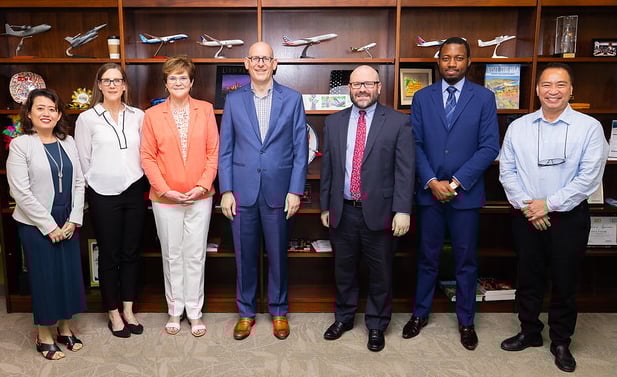
Left to right: USDEC Southeast Asia leader Dali Ghazalay; Chair Becky Nyman; President and CEO Krysta Harden; Deputy Chief of Mission for the U.S. Embassy in the Philippines Robert Ewing; Foreign Ag Service Counselor Michael Ward; Ag Attache Herpin Rochet Jateng; and USDEC Country Manager for the Philippines Mac Macatangay.
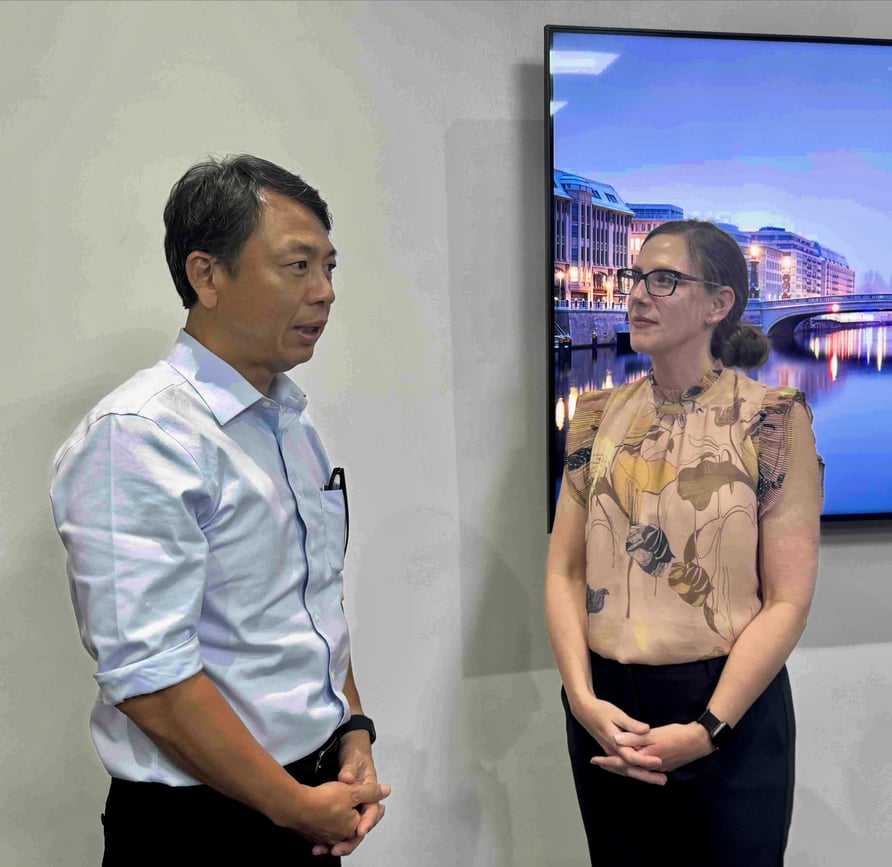
Teodoro T. Po, president and CEO of Century Pacific Food Inc., talks U.S. dairy with Nyman.
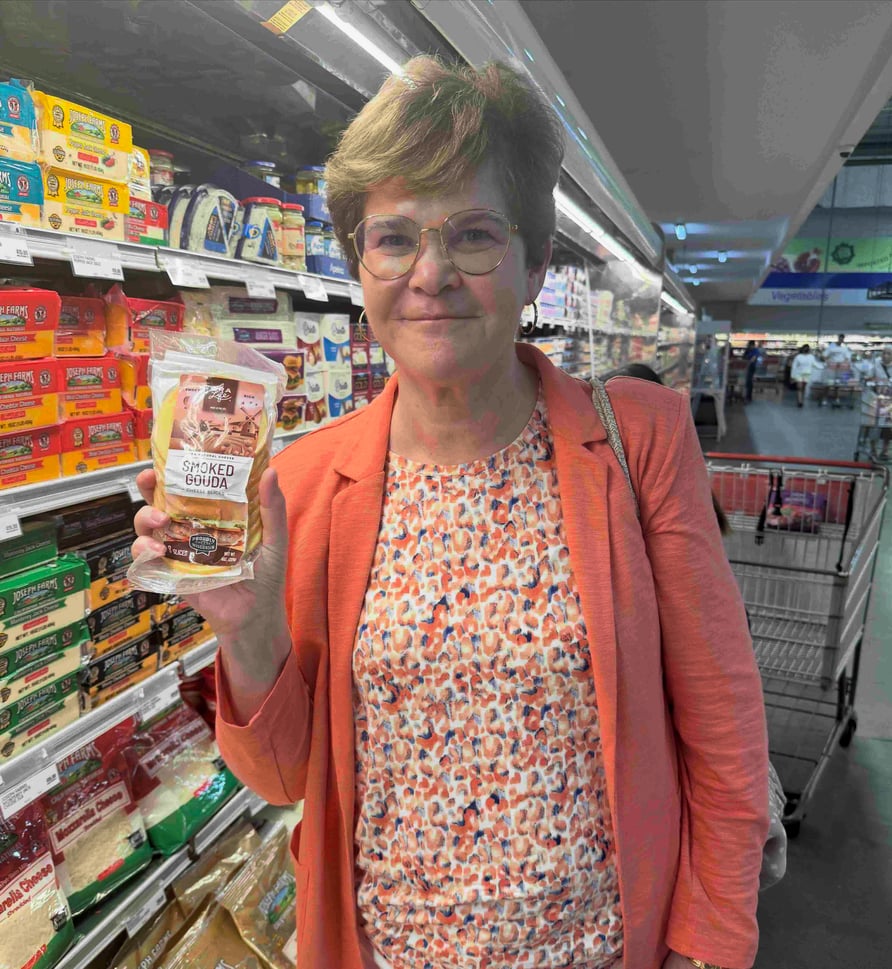
Harden checks out U.S. products in the cheese aisle of a grocery store in Manila.

Nyman and Harden talk U.S. dairy export opportunities in Malaysia with U.S. Ambassador to Malaysia Edgard Kagan.
Research unpacks five key consumer needs in Southeast Asia
The USDEC Strategic Insights (SI) team released a new research report titled, Unpacking Five Key Consumer Needs in Southeast Asia. The five top needs were shortlisted based on consumer data and growth opportunities for U.S. dairy ingredients in packaged food and drink in the region. The report provides insights on:
- Balance: When pursuing this holy grail of taste versus health, the consumer mindset is influenced by the context of whether the need is to make a healthy product tastier or an indulgent one healthier.
- Cravings: Not all cravings are the same. Reactions vary depending on whether the trigger is internal or external and the extent of predictability.
- Energy: Multiple dimensions sit within this, and needs vary based on the quantum; from a gentle reset to sustaining, uplifting, or getting a quick boost.
- Gut Health: While acknowledged as a marker of holistic health, consumer understanding of gut/digestive health is nascent, with most still in remedy-seek mode.
- Protein: Protein-added innovations with holistic health benefits like immunity broaden appeal. Options that focus on energy and satiation are more easily accepted.
This qualitative study complements a broader set of Southeast Asia landscape studies on the beverage, bakery, and snack categories, which can be accessed through the following links.
- Bakery Landscape in Southeast Asia: | U.S. Dairy Export Council
- Beverages Landscape in Southeast Asia: | U.S. Dairy Export Council
- Snacks Landscape in Southeast Asia: | U.S. Dairy Export Council
For more insights, visit the USDEC website research reports page linked here. If you have questions, please contact Max Heston at mheston@usdec.org.
South Korean workshop highlights dairy protein benefits to key opinion leaders
Twelve high profile key opinion leaders in the South Korean food and nutrition community attended USDEC’s “Fill the Protein Gap at Breakfast” workshop April 30 in Seoul. The workshop sought to bolster health professionals’ knowledge of the nutritional benefits of dairy proteins with a focus on three factors: protein quantity, protein quality and the timing of protein intake.
Attendees agreed that Korean consumers lacked knowledge of quality differences between proteins derived from different sources. In addition, in terms of timing of protein consumption, South Korea has a glaring gap in protein intake. That gap is breakfast.
As in many parts of the world, protein consumption in Korea tends to be skewed, with morning meals heavy on carbohydrates and low in protein.
USDEC speaker Leslie Bonci, registered dietitian and owner of nutrition consultancy Active Eating Advice, helped enlighten attendees about why it was important to spread protein consumption throughout the day, how protein requirements differ between different types of people (sedentary adults vs. athletes vs. older adults vs. people healing from injuries, etc.), and why protein quality matters.
In terms of protein quality she gave a memorable demonstration showing the sizable difference in the volume and calories a person would need to consume of different protein powders and breakfast foods (like eggs and oatmeal) compared to one scoop of WPI. Such visuals clearly drove home how dairy protein’s nutritional quality stands out from other sources.
She also developed two Korea-friendly breakfast recipes—high-protein pumpkin oatmeal with almonds and high-protein black sesame porridge—for sampling that featured WPI during the workshop, reinforcing the argument that boosting protein consumption at breakfast is simple.

Leslie Bonci holds up a large bowl of oatmeal, highlighting that it takes three cups of uncooked or six cups cooked oatmeal to equal the leucine content in just one scoop of whey protein isolate.
Additional speakers
Prior to Bonci’s presentation, USDEC Korea vice president Shin Chung explained what USDEC is and does. USDEC’s Kristi Saitama, vice president, Global Ingredients Marketing, closed out the event highlighting examples of prototype and commercial dairy-protein fortified products aimed at breakfast eating occasions. Saitama urged attendees to spread the word about the insights gained to stimulate protein innovation at breakfast—an underserved opportunity in South Korea.
“Post-workshop feedback from attendees was very positive,” said Saitama. “They reported that they gained valuable insights from Leslie Bonci into the country’s nutritional gap at breakfast. They also said the product ideas we shared provided inspiration for easy and convenient ways to boost protein consumption in their daily lives. And they were eager to share those learnings, which is exactly why we held the workshop.”
The workshop itself is already spreading the word through the media. In addition to the 12 key opinion leaders at the workshop, USDEC also invited three Korean health media attendees. All three have already posted stories about the event, highlighting key learnings on protein quality, quantity and timing and the importance of protein at breakfast. The South Korea office also provided a recap of the event to several non-attending health media publications , which had generated 10 online stories as of May 6 and counting.
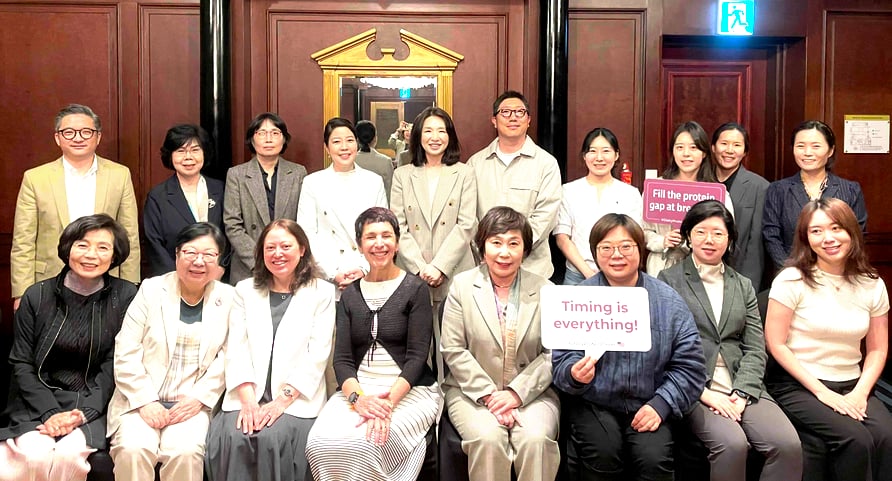
Participants and presenters from the South Korean “Fill the Protein Gap at Breakfast” workshop.
USDEC News
New USDEC website features put more information at members’ fingertips
USDEC made two additions to the USDEC website aimed at making information on events and members easier to find.
Event Calendar: A new comprehensive Event Calendar is located under the Member Services tab in the Marketing & Events section at usdec.org. The new planning tool is laid out like a monthly calendar page with color coded labels indicating the topic (e.g., ingredients, cheese, trade policy, etc.). Links take members to short descriptions of each event, with contact names and, when applicable, registration information. The new feature should make it easier for members to remain informed of all upcoming activities relevant to their businesses.
Membership Directory contact information: USDEC’s Membership Directory (also under the Members Services tab) now includes the names and email links to all USDEC directors, split out by membership type (processor, trading company or allied).
For questions about the calendar, please contact Weston Abels at wabels@usdec.org. For questions about the membership directory, please contact Erica Louder at elouder@usdec.org.
USDEC welcomes Erlich Foods and Rail Modal
Late last month, USDEC approved the latest two member to join the organization: Erlich Foods, a trading company based in Calabasas, California, and Rail Modal Group, an allied organization located in Lathan, New York. Jon Weston, manager, will serve as USDEC director for Erlich; Monica Oberling, vice president of business development, will be USDEC director for Rail Modal. Welcome to USDEC!
Events
USDEC 2025 events
For your convenience, USDEC has compiled a chronological list of dairy export-related member events currently slated for 2025. This list is effective as of May 9 and will evolve as new opportunities develop, funding is finalized, or unexpected changes arise.
MAY
- USDA Agribusiness Trade Mission, Hong Kong, May 12-16, 2025
JUNE
- USDA Agribusiness Trade Mission, Peru, June 9-12, 2025
- Seoul Food and Hotel Trade Show, Seoul, June 11-14, 2025
- International Cheese and Dairy Awards, Stafford, England, June 25-26, 2025
JULY
- USDA Agribusiness Trade Mission, Dominican Republic, July 13-16, 2025
- Expo IAlimentos, Colombia, July 30-31, 2025
AUGUST
- Food Ingredients South America, Brazil, Aug. 26-28, 2025
SEPTEMBER
- U.S. Dairy Supply Seminar, Sept. 11, Ho Chi Minh City, Vietnam
- U.S. Dairy Supply and Innovation Seminar, Thailand, Sept. 15, 2025
- Food Ingredients Asia, Thailand, Sept. 17-19, 2025
- Espacio Food and Service, Chile, Sept. 30-Oct. 2, 2025
OCTOBER
- U.S. Dairy Innovation Seminar, Oct. 2, Ho Chi Minh City, Vietnam
- USDEC Sustainability Seminar, Singapore, Oct. 7-8, 2025
- Food Tech Summit & Expo, Mexico, Oct. 8-9, 2025
- IDF World Dairy Summit, Chile, Oct. 16-25, 2025
- Ingredients Advisory Group Tactical Plan Meeting, Chicago, Oct. 21, 2025
NOVEMBER
- USDA Agribusiness Trade Mission, Mexico, Nov. 3-6, 2025
- U.S. Dairy Protein Nutrition Seminar, Nov. 4, São Paulo, Brazil
- Gulfood Manufacturing, Dubai UAE, Nov. 4-6, 2025
- COP30, Brazil, Nov. 10-21, 2025
- World Cheese Awards, Bern, Switzerland, Nov. 13-15, 2025
DECEMBER
- 4th Quarter Joint USDEC Meeting of the Cheese and Consumer Products Advisory Committee and the Trade Policy Committee Meeting, Washington, D.C., Dec. 10-11, 2025
Market Summary
Prices shoot up at GDT
The bulls hit their stride at the May 6 Global Dairy Trade (GDT) auction. The GDT Price Index jumped 4.6%—the third straight increase, each one higher than the last—as buyers seemed increasingly intent on securing supply in the face of tariff uncertainty, the end of the Oceania milking season and a slow start to the EU milk production year.
Demand was strong, led by Southeast Asia and the Middle East. Southeast Asia/Oceania took 38% of product sold, besting North Asia (China) as the top buyer for only the second time since last summer. It led all WMP and butter buyers, while the Middle East led cheddar and AMF purchasing.
All products except mozzarella posted gains, most of those significant increases. The average winning cheddar price jumped 12% to US$5,519/MT, the highest since May 2022. Butter set yet another GDT record high, rising 3.8% to $7,992/MT as global demand continues to surge in the face of tight supply.
WMP increased 6.2% to US$4,374/MT—a three-year high. AMF rose 5.4% to US$7,212/MT and is up nearly 10% over the last three auctions.
GDT Pulse events and NZX futures markets heading into the auction predicted gains, but not to the levels seen. Only SMP, which increased a modest +0.5% to US$2,828/MT, came in around where expected. And only mozzarella declined, albeit only -0.3% to US$4,752/MT.
Upcoming EU and New Zealand milk production reports as well as tariff developments over the next two weeks should provide some clues about how much more room prices have to grow before they hit a ceiling—if they haven’t already reached upper boundaries.
Supply Chain
Declining container ship traffic fuels concerns
Supply chain concerns are mounting as global shipping faces a dramatic contraction amid escalating trade tensions between China and the U.S. As ocean carriers slash capacity by cancelling scheduled ship sailings from Asia to the U.S., it may filter down to dairy exporters including in the form of reduced container availability and shipping options, which could lead to increased shipping costs.
The Port of Los Angeles reported that the impact of tariffs imposed on the largest U.S. trading partners, including 145% tariffs on goods from China, is beginning to have impacts on cargo volumes. After the port’s second busiest year ever in 2024, and even higher volumes in the first few months of 2025 in anticipation of tariffs, this week import volumes are expected to shrink by 35% compared with the same time last year as shipments out of China from major retailers and manufacturers dramatically decrease.
The Port of Los Angeles Port Optimizer tool tracks blanked sailings and several other data points and can be accessed here. The Port Optimizer reports a significant YOY decline in TEUs coming into Los Angeles through May 17 before year-over-year volume begins to grow again. But the port is expecting an overall drop of at least 10% for the second half of the year. Overall, carrier capacity on Asia-U.S. East and Gulf Coast routes is expected to fall around 42% this week, with West Coast routes estimated to decrease up to 28%. Analysts attribute these drops to sudden declines in demand, with canceled bookings in China estimated between 30% and 60%.
Industry leaders caution that unless U.S.-China trade relations stabilize, this disturbance could mimic the pandemic-era supply chain disruption through the remainder of this year. That disruption led to container shortages, cargo backups, scheduling nightmares, higher costs and delayed shipments. (USDEC Staff; CNBC, 4/29/25; The Loadstar, 4/22/25)
Company News
Foremost Farms USA names new president, CEO
Wisconsin-based Foremost Farms USA named Brenda Dehart president and CEO, effective immediately. Dehart joined Foremost Farms in February 2024 as CFO. She previously served as CFO at Edlong and held leadership roles at Sensient Technologies and Kerry Inc. Former Foremost chief Greg Schlafer stepped down in April to become take over as president and CEO of Hilmar Cheese. (Company reports)
Sources say Meiji, Saputo may bid in Fonterra's consumer business sale; Fonterra to appeal court ruling
Japan-based Meiji Holdings Co. and Canada-based Saputo have reportedly joined the list of potential bidders for the global consumer businesses that New Zealand’s Fonterra Co-operative Group is looking to divest (see Global Dairy eBrief, 4/11/25). The proposed divestiture includes the operations and marketing of brands such as Mainland and Anchor butter, Kapiti ice cream and cheese, and Anlene packaged milk powder. The sale also includes the Fonterra Oceania and Fonterra Sri Lanka units, with operations from milk collection to processing to supplying products to consumers and foodservice companies. A deal for the businesses Fonterra is divesting is estimated to be valued at around NZ$4 billion (about US$2.4 billion).
Separately, Fonterra said it planned to appeal a ruling last week by the New South Wales Supreme Court. The court dismissed Fonterra’s claim that the divestment would not affect its trademark deal with Bega Cheese, and there was some speculation the dismissal could delay a sale. Fonterra said the dismissal does not change its divestment plans, and it will continue to pursue both a trade sale and initial public offering (IPO) as potential options. (Rural News Group, 5/7/25; Reuters, 5/1/25)
Chinese dairy sees mixed results in recent reporting
Recent financial results in the Chinese dairy industry reveal a mixed landscape marked by areas of strong growth alongside ongoing challenges. Chinese dairy companies credit product innovation, cost control measures and improvements to operational efficiencies for their positive gains, and say they are looking to enhance future results through similar efforts.
- In its 2025 Q1 report, Chinese cheese company Milkground said its revenue reached US$169 million, up 6% YOY. Net profit of the company reached about US$11 million, a leap of 115% YOY. In the first quarter, Milkground increased its investments in product innovation, launching a series of new cheese items focused on products targeting family eating occasions and nutritional demands, including cheese marketed for children’s growth and cheese snacks. Milkground said it will continue to focus on innovation in cheese snacks and other products for adolescents and adults, family table consumption and sales to corporations. It also plans to enhance its supply chain, producing domestically made cheese products using milk produced at local farms.
- Xinjiang Terun Dairy reported that 2024 revenue was about US$383 million, an increase of 3% YOY. However, net profit plummeted 69% to about US$6 million. The dairy company cited the decrease of the gross profit from dairy farm operations, which was the result of low raw milk and cattle prices amid fierce competition. A company statement said Terun expects to reach about US$410 million in revenue in 2025.
- Infant formula brand BeingMate reported first-quarter revenue at about US$100 million, up 1% compared to last year. Net profit increased 94% YOY to about US$6 million. The company said the increases were the result of cost control measures and increased operational efficiencies. In recent years, it has actively expanded its product lines and market layouts, especially in the promotion of e-commerce channels.
- Bright Dairy’s Q1 2025 report showed revenue at US$877 million, down almost 1% YOY. net profit was about US$19 million, a decrease of 18% YOY. Despite the pressure on profitability, the company said it would improve its performance by optimizing its product portfolios and improving operational efficiency.
- Sanyuan Dairy reported first-quarter revenue of about US$227 million, a decrease of 19%. However, the net profit was about US$12 million, up 21% YOY—a result attributed to cost control measures.
- Total 2024 revenue for Yili Group was about US$16 billion, with the net profit at US$1 billion, both representing a YOY decrease. Meanwhile, its 2025 Q1 report showed revenue at about US$5 billion, up 1% YOY, with the profit increasing 24% to about US$637 million. Though the company still ranks first regarding market share of liquid milk, it said it focused more on its double-digit growth of powdered formula products this year. (USDEC China Office)
Lactalis to acquire Queijos Tavares in Portugal
To strengthen its presence in Portugal, France-based dairy company Lactalis said it will acquire local cheese maker Queijos Tavares from Lisbon-based private-equity firm Crest Capital Partners. Queijos Tavares produces cow’s, sheep and goat’s milk cheeses and supplies products under the brands Seia do Tavares, Serras de Penela, Damar and Monte da Soalheira to food distributors and the hospitality sector. The acquisition includes Queijos Tavares’ two production facilities located in Seia and Fundão and will increase Lactalis’ production sites in Portugal to four. The deal is subject to approval by regulatory authorities. (Just Food, 5/1/25)
Bega Group closing Strathmerton plant to streamline operations
As part of its efforts to simplify its operational footprint, Australia-based Bega Group said it will close its cheese processing and packaging facility in Strathmerton, Victoria, and transfer its functions to the company’s Ridge Street site in Bega, New South Wales. To support the transfer, Bega Group plans to invest approximately A$50 million (about US$32 million) in the Ridge Street site to modernize its cheese processing and packing capabilities to accommodate the combined operations. The closure is expected to be completed by mid-2026. (Just Food, 5/6/25)
Mergers, acquisitions and joint ventures
Argentine dairy processor Mastellone Hermanos rejected a bid from Argentine confectionery manufacturer Arcor to acquire La Serenísima. Mastellone Hermanos owns a 51% stake in fellow dairy processor La Serenísima and criticized Arcor’s bid as undervaluing the company. Arcor and Bagley Argentina, a division of Danone, currently own 49% of La Serenísima. (Dairy News Today, 5/5/25)
Company Briefs
Last month, K Coffee, a subsidiary coffee brand of KFC, marked its 1,000th China outlet in Beijing. The brand’s rapid expansion since opening standalone stores two years ago has been credited to opening stores close to KFC outlets and covering venues including airports and tourist destinations. … Clearway Capital, a German investment firm that’s an activist investor in Irish nutrition company Glanbia, wrote a plea to the board of Tirlán, Glanbia’s largest shareholder, seeking support for a “fundamental strategic review focused on separating Glanbia’s distinct business units.” The letter calls out “the persistently disappointing returns that Glanbia has delivered to its shareholders over the past several years including to Tirlán Co-operative Society and to the thousands of society members who own shares directly.” … New Zealand-based boutique dairy company Origin Earth announced it will close after receiving a notice from its landlord that the lease was ending and Origin Earth had to be out of the building by May 31. Officials from the company, which has been producing a range of milk, cheese and yoghurt products for 15 years, said they have listed the business and factory equipment for sale and are hoping someone might buy the Origin Earth brand. (USDEC China office; Agriland, 4/24/25; Radio New Zealand, 5/4/25)
In Case You Missed It...
U.S. Dairy Exporter Blog
Market analysis, research and news subscribe hereUSDEC Twitter feed
Follow us here.